

Would you ever let your teenager fly unaccompanied – without you or a guardian adult? This was a question I never thought to ask myself until a situation came up where the kids had an opportunity to fly from Virginia to Florida to visit their grandparents (my mom and dad) while Mr. Family Trip and I stayed back.
After thinking about it a lot (all the mom feelings!) and talking about it as a family, we decided to let our kids fly solo. But to make it work for everyone involved, we had some caveats and conditions.
Get Tips from the Trip Delivered

Life with a family is constantly a trip, and we’re here to take it with you. Once a month, we send intimate essays, tips, book recommendations, and travel guides to help you live an intentional family life
As parents, we know we need to let our kids out into the world to prepare them for life independent of us. We have to let go of the reins where appropriate and let them lead. But knowing when things are appropriate, so we’re not putting them in danger, is very tricky.
And as parents, we always still kind of tug at the reins, making decisions in the background to keep some guardrails in place.
The decisions we make about when our teens go out into the world without us, another milestone of independence met, usually come down to either necessity and/or risk assessment. How risky is it for them to drive there, in this car, at this time of day? How risky is it for them to spend the night at that person’s house? & so on.
When it came to flying on their own, we felt that a direct flight from us on one end to the grandparents on the other was a fairly low-risk assessment and one worth trying.
Of course, everyone has different risk assessments when it comes to flying in general. I come from a dad who was a commercial airline pilot for decades, so I consider flying fairly safe. (Honestly, it feels safer to send my teens on a commercial flight than it does to let my 16-year-old drive on the interstate. You can read facts on the safety of flying compared to driving here.) I understand, though, that it can be an emotional decision.
I ended up waving at my two most precious human beings in the world as they walked past a gate agent and down a plane jetway without me, smiling and waving but not turning back. I watched as their plane pushed back from the gate, without me on it. I saw their plane lift off and heave into the sky. I felt so excited for them. In that moment, I felt a future of adventure coming their way. And I felt like I had given them the world – literally.
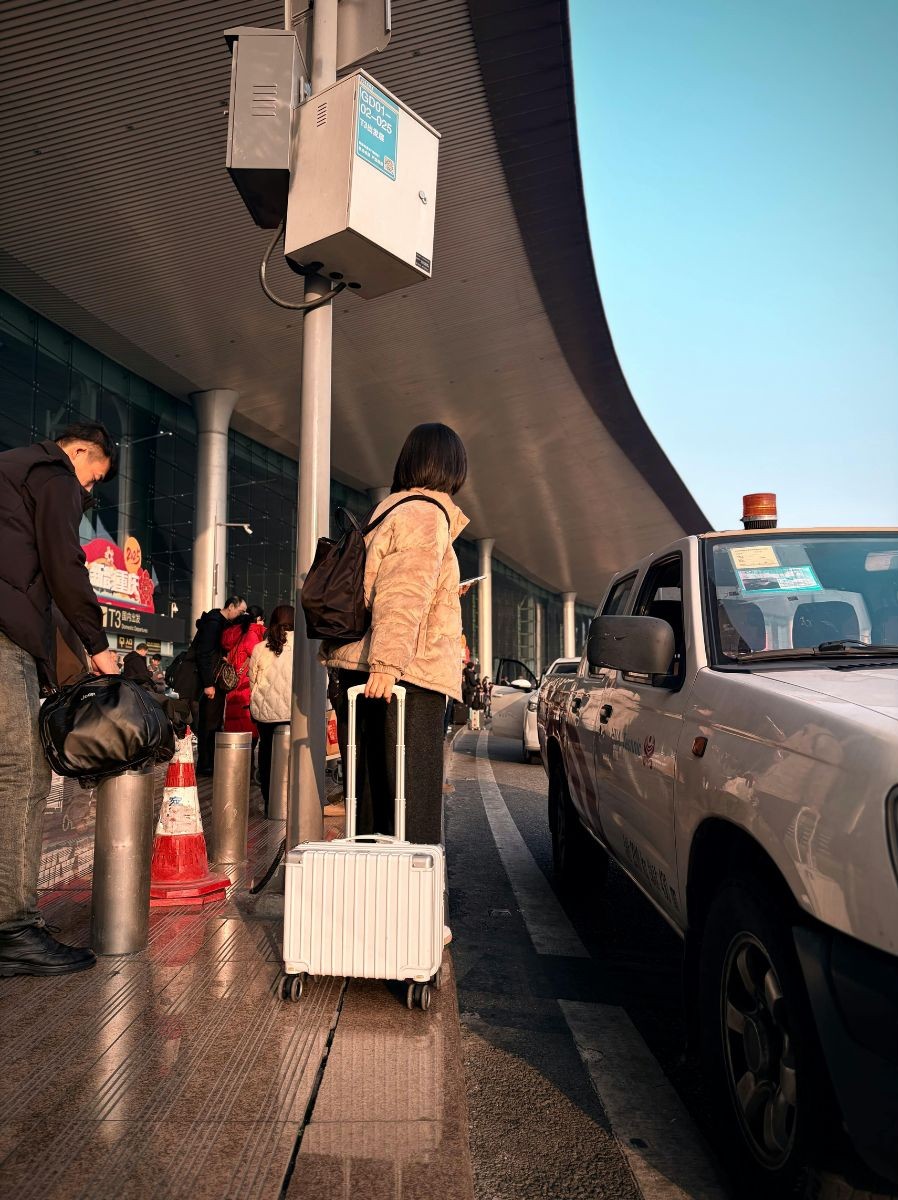
Tips to Letting Your Teenager Fly Alone
- Every airline has a slightly different policy (and pricetag).
This was the most confusing part of booking our kids’ travel: every airline has a different policy, and you usually have to dig around to figure it out. For example, the age at which a child is considered a minor differs anywhere from 14 to 16. Also, some airlines charge additional for teens consiered minors flying alone, while some will not charge additional if they are with a sibling who isn’t a minor.
So just do your homework!
We started with the flight itineraries we’d be most likely to consider, then went to those airlines’ websites and found their policies. We ended up sending our kids on Breeze Airways, which has a very liberal policy on what they consider an adult.
Note, though, that you may want your child to be considered a minor and pay extra for that ticket. Airlines offer additional services to minors flying unaccompanied, such as escort to the gate, preboarding, etc. We didn’t feel this service was necessary with our kids, given their ages, the direct flight itinerary, and how much they had traveled. But it is worth considering based on your comfort level.
2. Consider a nonstop flight option.
This was huge for us. We drove to an airport in a different nearby city rather than use our small hometown airport so our kids could fly direct.
The biggest risk, in my mind, of our children flying unaccompanied was getting stranded somewhere NOT their destination or hometown. This is, of course, more likely to happen if there is a connecting flight. This may not always be possible, but for us it was a key component of our decision-making process.
3. Have them fly with photo ID.
You should plan to have a photo ID for your kids that they should keep on them. If they have a learners permit or drivers license, that works. But, if not, you should send them with their passport.
4. You may or may not be able to accompany them through security and to the gate.
Each airport has different allowances for whether non-flyers can get a gate pass. I was able to get a pass to go through security and take them to the gate at their departure airport when they left as it was a smaller airport; my parents were not allowed access on the return trip as it was a major airport that was much busier.
This decision will be up to the agent when you check-in at the airlines counter. You will only know then (if you ask) if you can go to the gate with them.
Note that if you do go to the gate, you will be subject to security screening as per usual.
5. It helps if your teens have previous travel experience.
This isn’t necessary, of course. There has to be a first time for everything. But our teens were quite comfortable with airport processes, which made us feel more comfortable sending them. They knew how to read the airline announcement boards, find gates, purchase food and beverages in shops, etc.
We have, through the years, been making them navigate and make decisions for our family when we travel as practice. (See this post from years ago about using maps.)
6. Make sure your teen has a way to pay for what may be needed, including cash.
A lot of airport vendors don’t accept cash anymore, but there are times when tipping or an emergency situation will require cash. So send your teen off with options to pay both ways.
(Our teens both have savings accounts, and our oldest has a debit card tied to his account. This and some cash were sufficient for this trip.)
7. A phone and way to contact your teen goes a long way.
Of course, this seems obvious. And while they couldn’t talk to or message us while in-flight, the location services and knowing we could all connect if something went wrong were such a mental relief.
Our youngest still has the Bark phone, which has location services, and our oldest has an iPhone with the Bark app installed. (See my full review and explanation of Bark here.)
8. Acknowledge that this is a big moment and there will be nerves (for everyone).
This was a big deal for our family! While our kids are world travelers and we foster their independence wherever we can, this is still a scary thing! We acknowledged all of those feelings, talked about them, but we didn’t languish in them either. Don’t neglect the fact that there will be nerves and feelings all around, or try to deny those. Do try, however, to lean in to the excitement and opportunity.
In the end, though, all of our feelings ended up being ones of accomplishment and pride.
Our kids were proud of themselves for independently navigating the world. We were proud of them for being successful – another step of knowing they can do life without us (also, bittersweet). My parents loved having their grandkids at their house for a long weekend.
This was a big step for all of us, and it wasn’t one we’re going to be doing on a too-frequent basis (I like to travel WITH my kids since I like them as human beings). But this was a successful experience overall, and one I am glad we took the risk on.
Like it?
Save it.