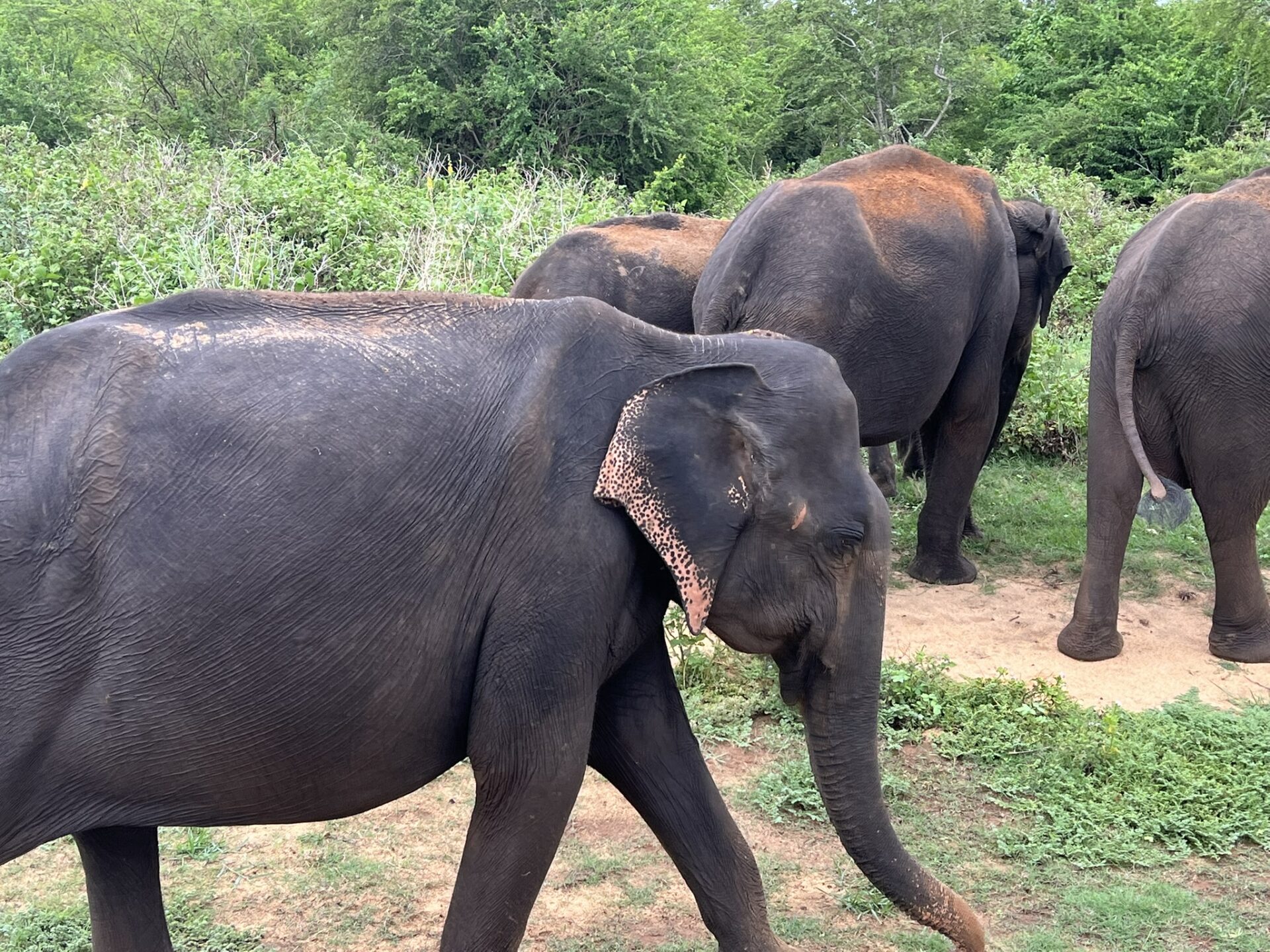
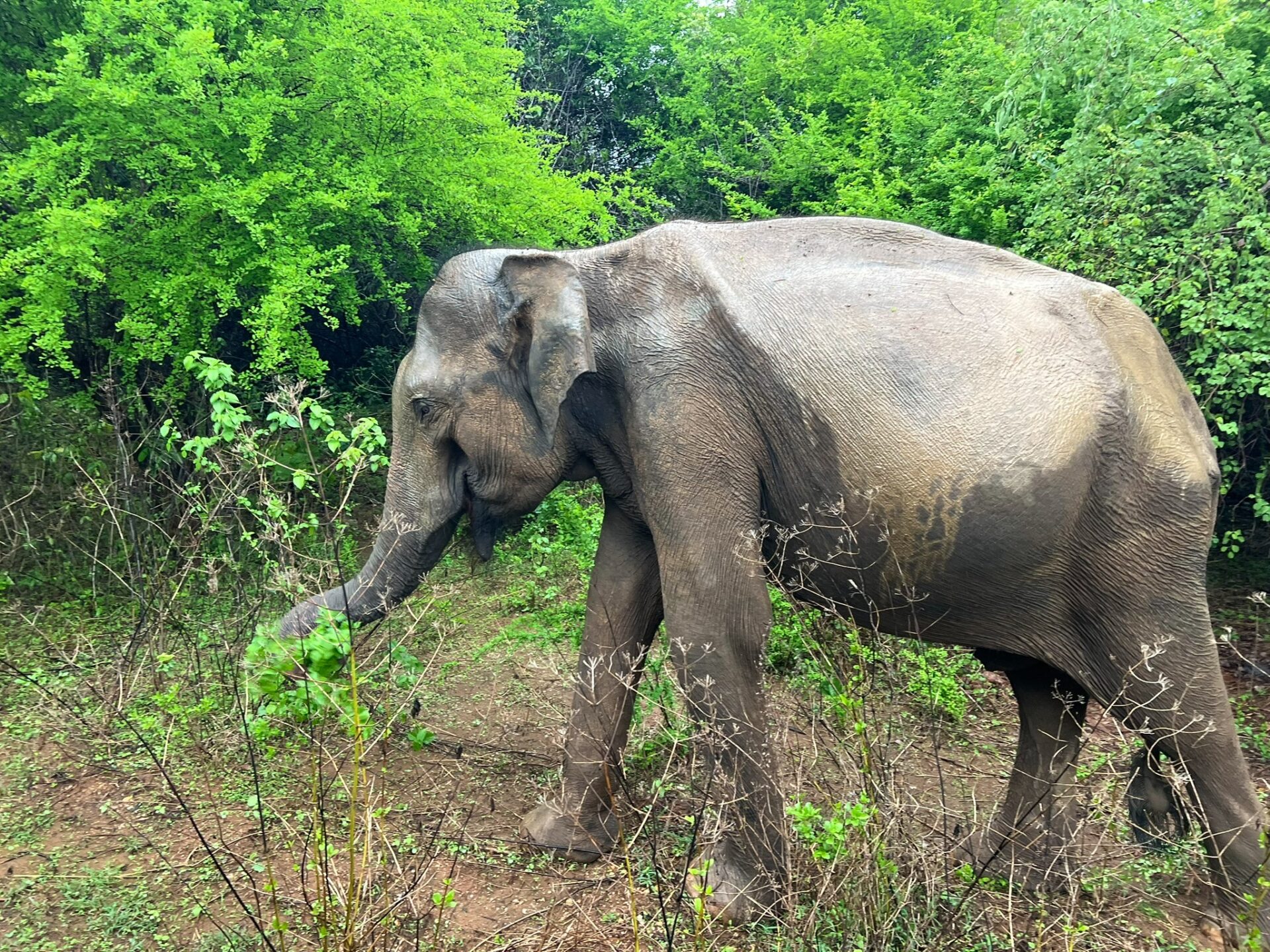
This was the adventure I was most looking forward to – and, if I can be honest, most people are envious of. I went to a remote island in Asia, tucked in the Indian Ocean, and saw elephants (many of them) in the wild. I went on an elephant safari in Sri Lanka.
This post is a bit less of a how-to or guide. You absolutely must do this with a guide if you are traveling to the country as a tourist (more on that below).
But this is my opportunity to convince you that you should definitely do this!
While on my travels through Sri Lanka (which was done through a small group tour package I’ll share later, so stay tuned), we had a day booked at Udawalawe National Park for a safari.
While this is called a safari, really (particularly for me), it was all about the elephants. We saw a few other kinds of animals (and a LOT of peacocks), but the elephants were what we were searching for and what took our breath away.
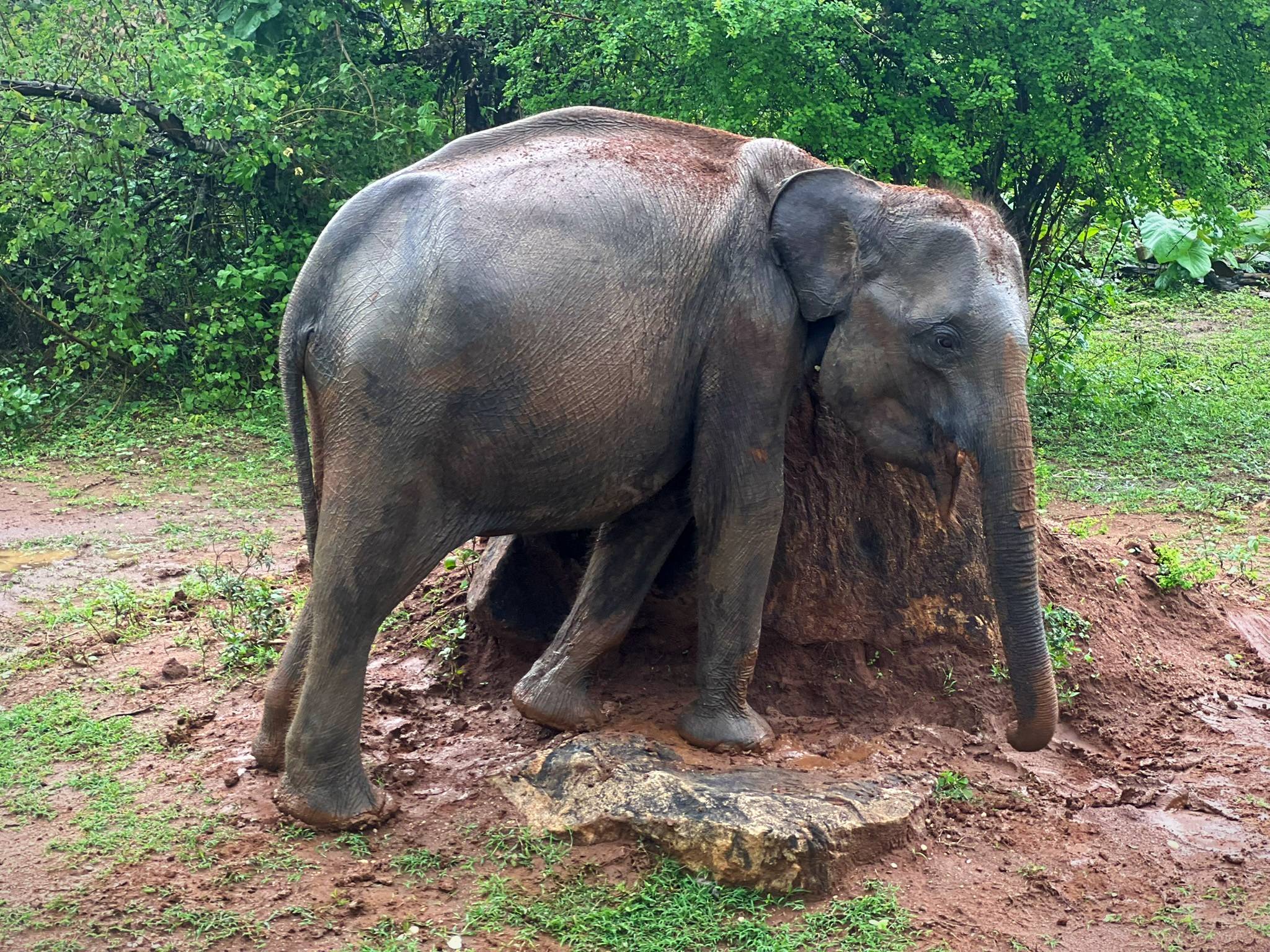
We drove into the park and immediately found a young elephant joyfully scratching away on a rock. It took very little time to have our first fantastic elephant encounter.
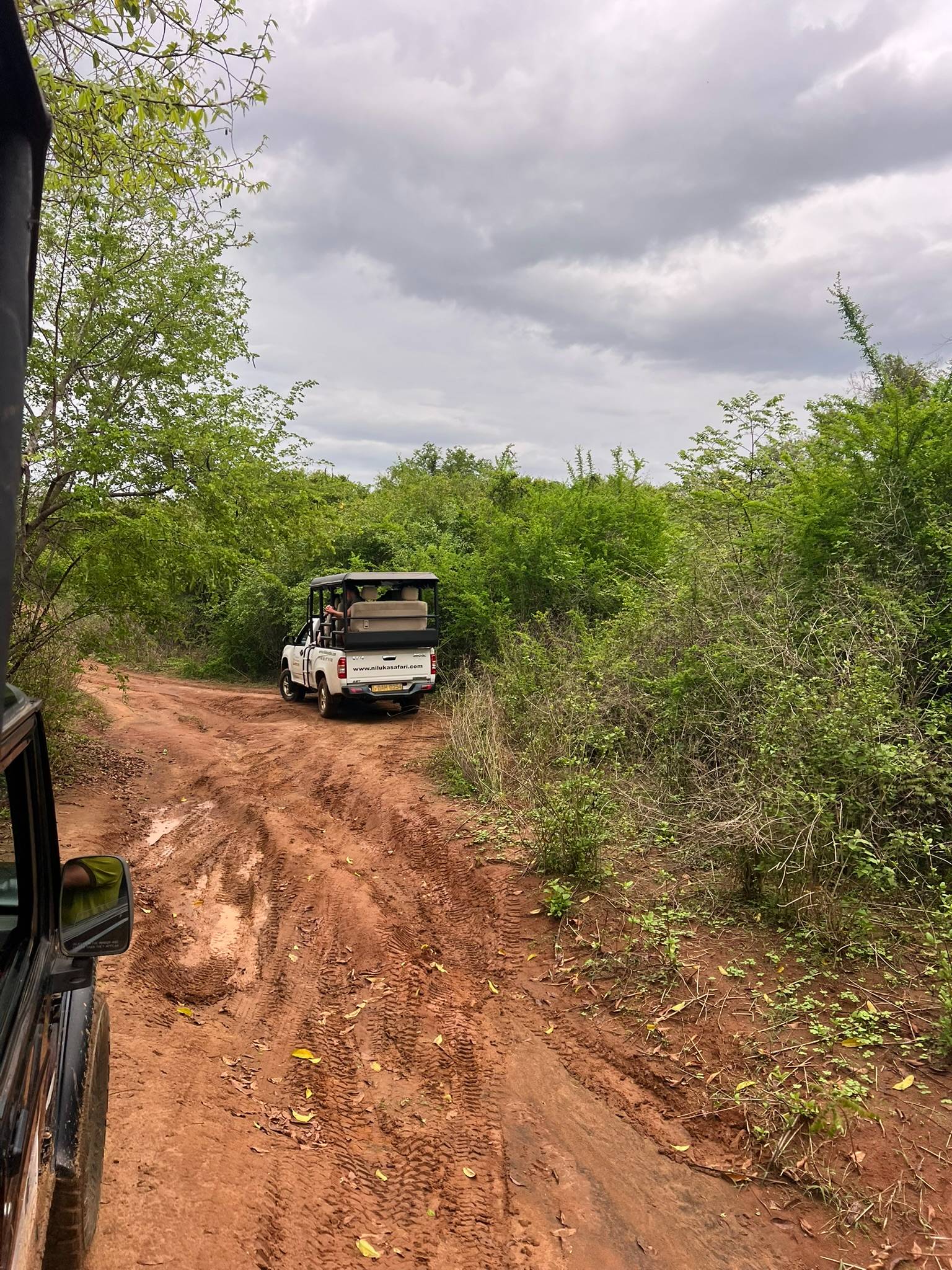
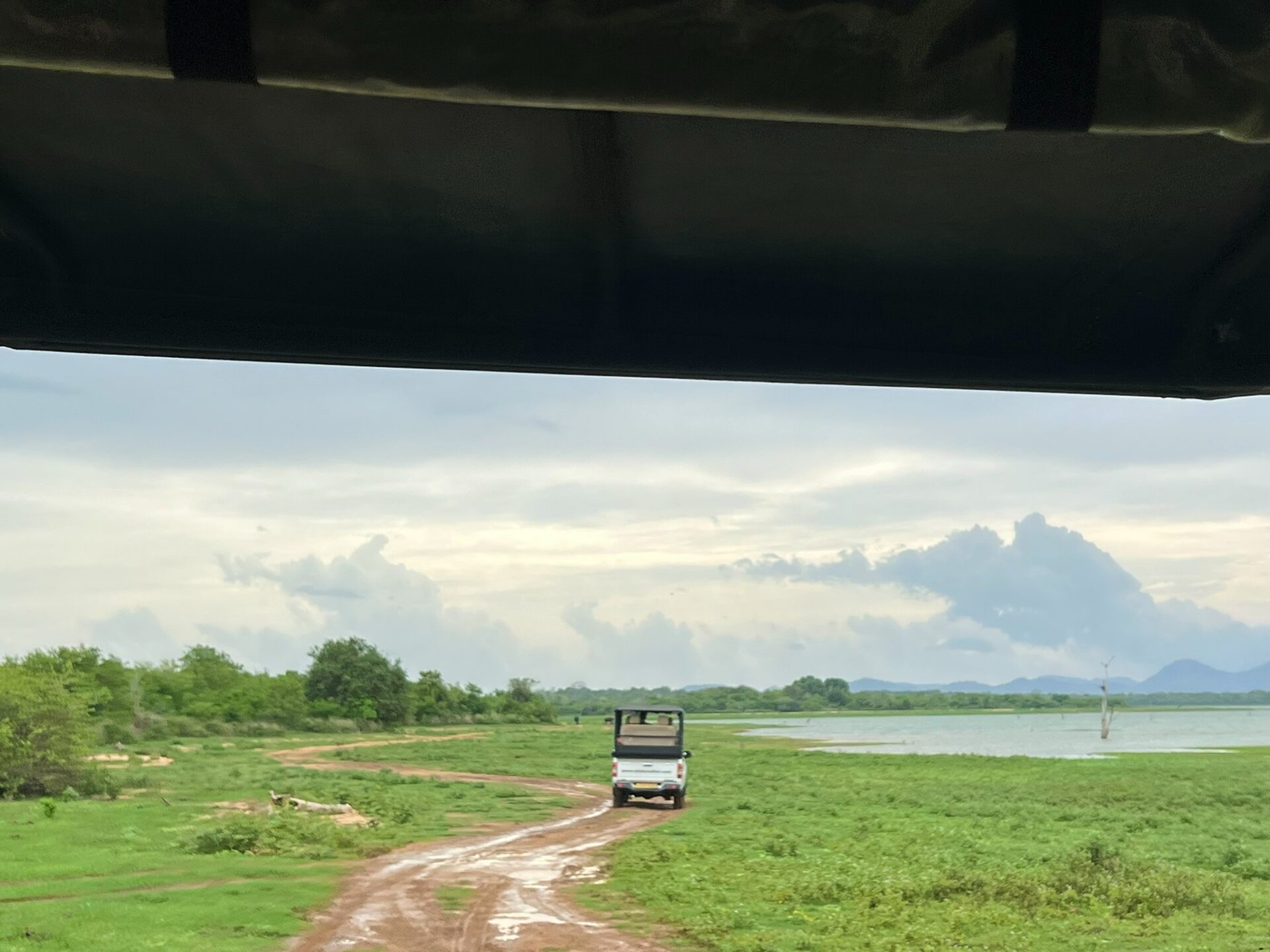
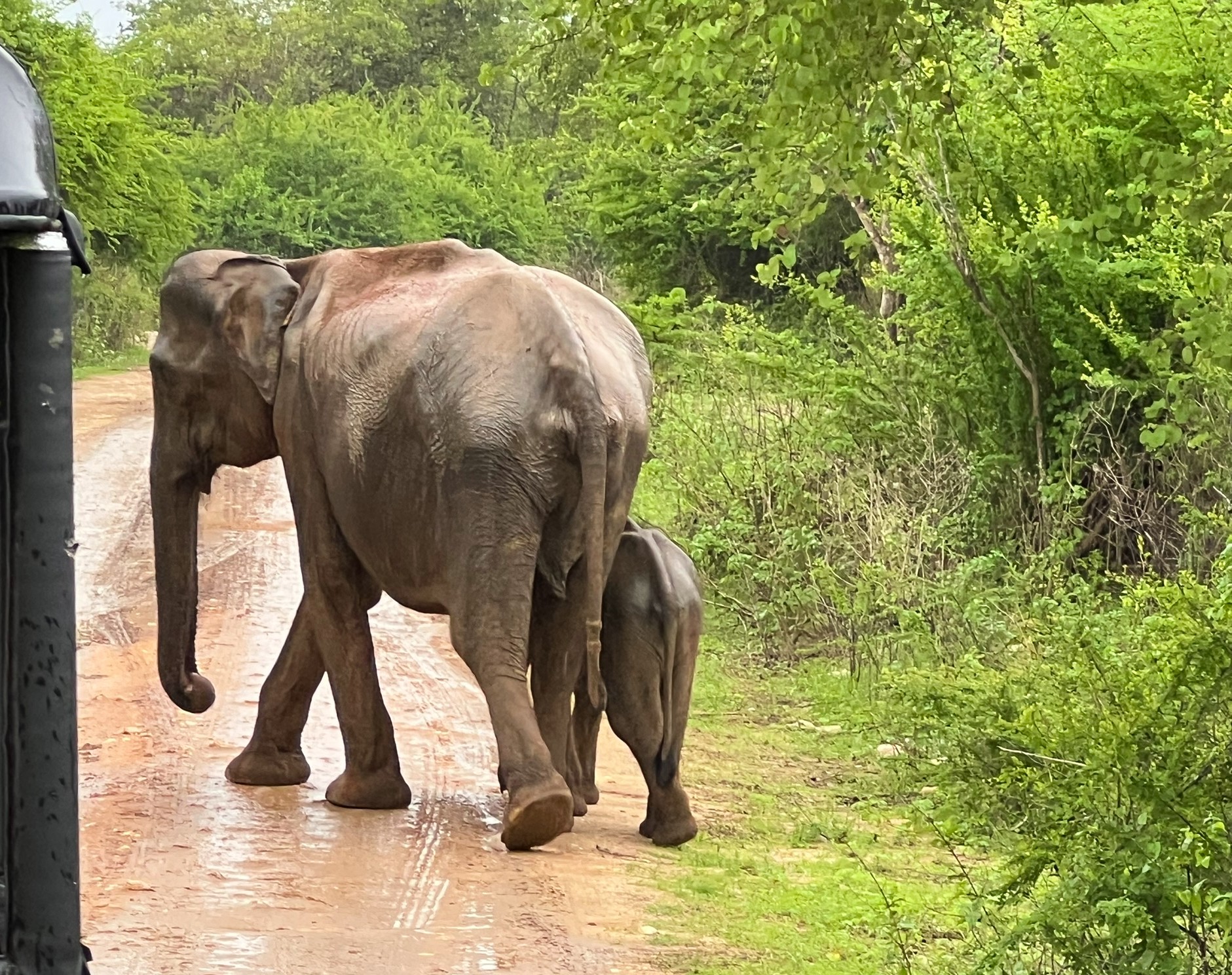
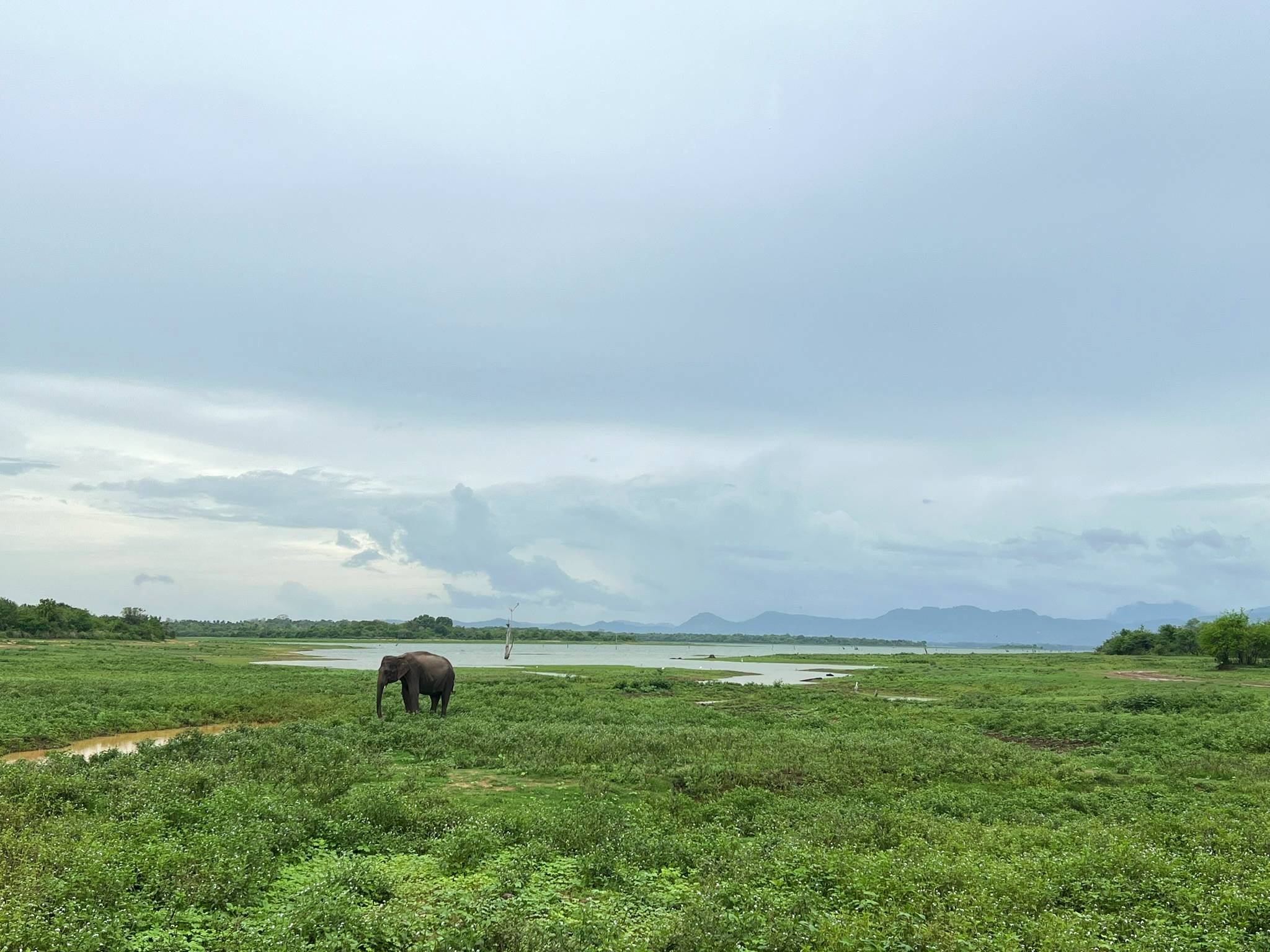
After that, we drove through the scraggly jungle for quite a while, wondering if we’d see anything else at all, until the trees opened up onto a large body of water, rolling fields, and mountains against the horizon. There, it was magical. We just had to be patient. After that, we saw more elephants out and active than I ever could have imagined.
How to get to Udawalawe National Park:
As I have shared in other posts, Uber and Pickme work very well for getting between towns in Sri Lanka. And, given the relatively small geographic area of the major tourist towns (Kandy, Ella, Galle, Unawatuna, Colombo, Negombo) nothing takes too terribly long to commute to. You can also opt to hire a private driver.
The national park is about 160 km from Colombo.
About Udawalawe National Park:
This spot was established as a national park in 1972 and is home to over 450 elephants! There are over 30,000 hectares here for the animals to explore and roam.
I have never been on an African safari, but I have read consistent reports that the Sri Lankan safari provides more up-close and guaranteed sightings of elephants.
You will need a large, 4WD, rugged vehicle to do this excursion. This, and navigation issues (see below) is why you will most definitely hire a company to take you on safari.
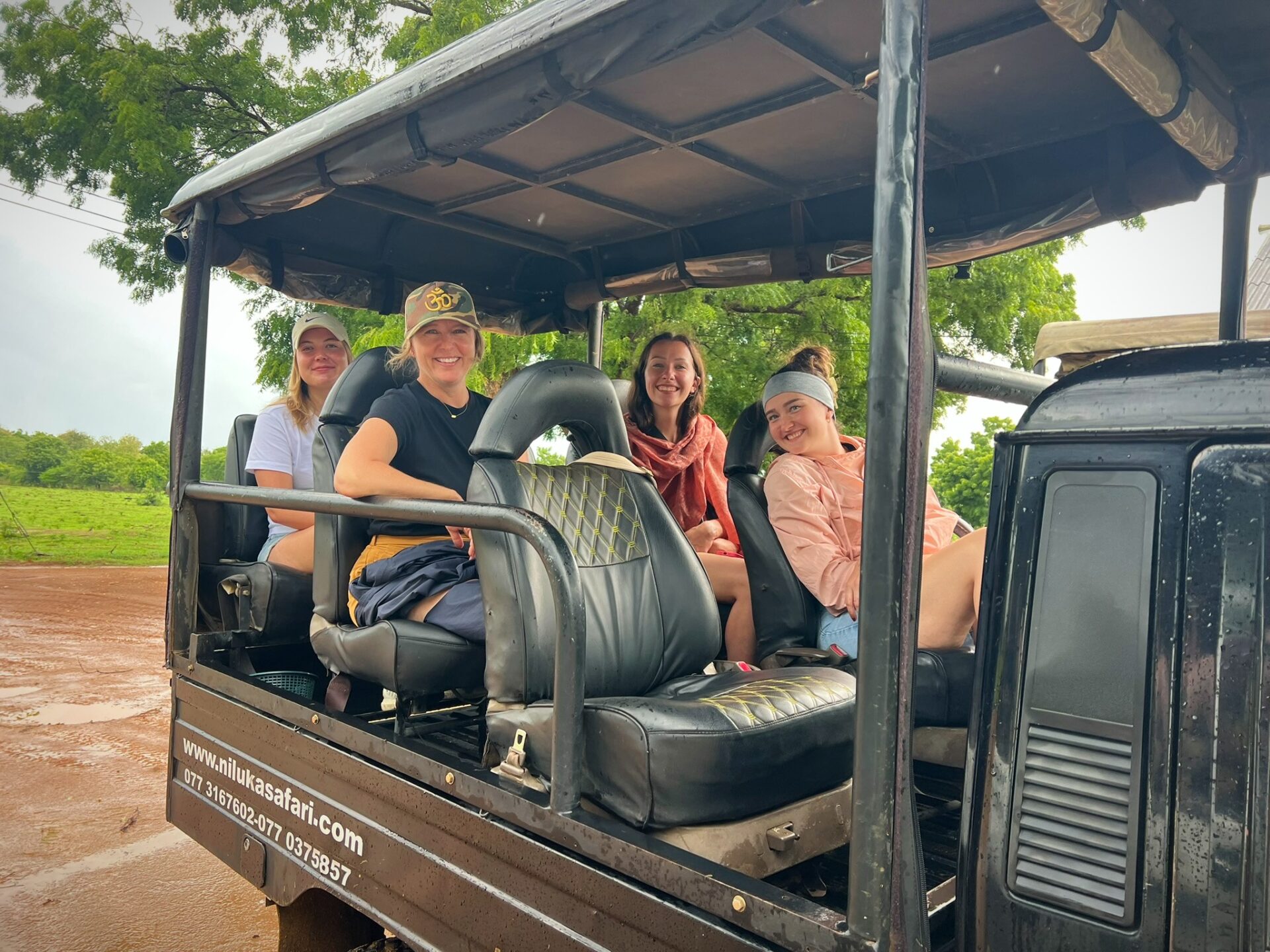
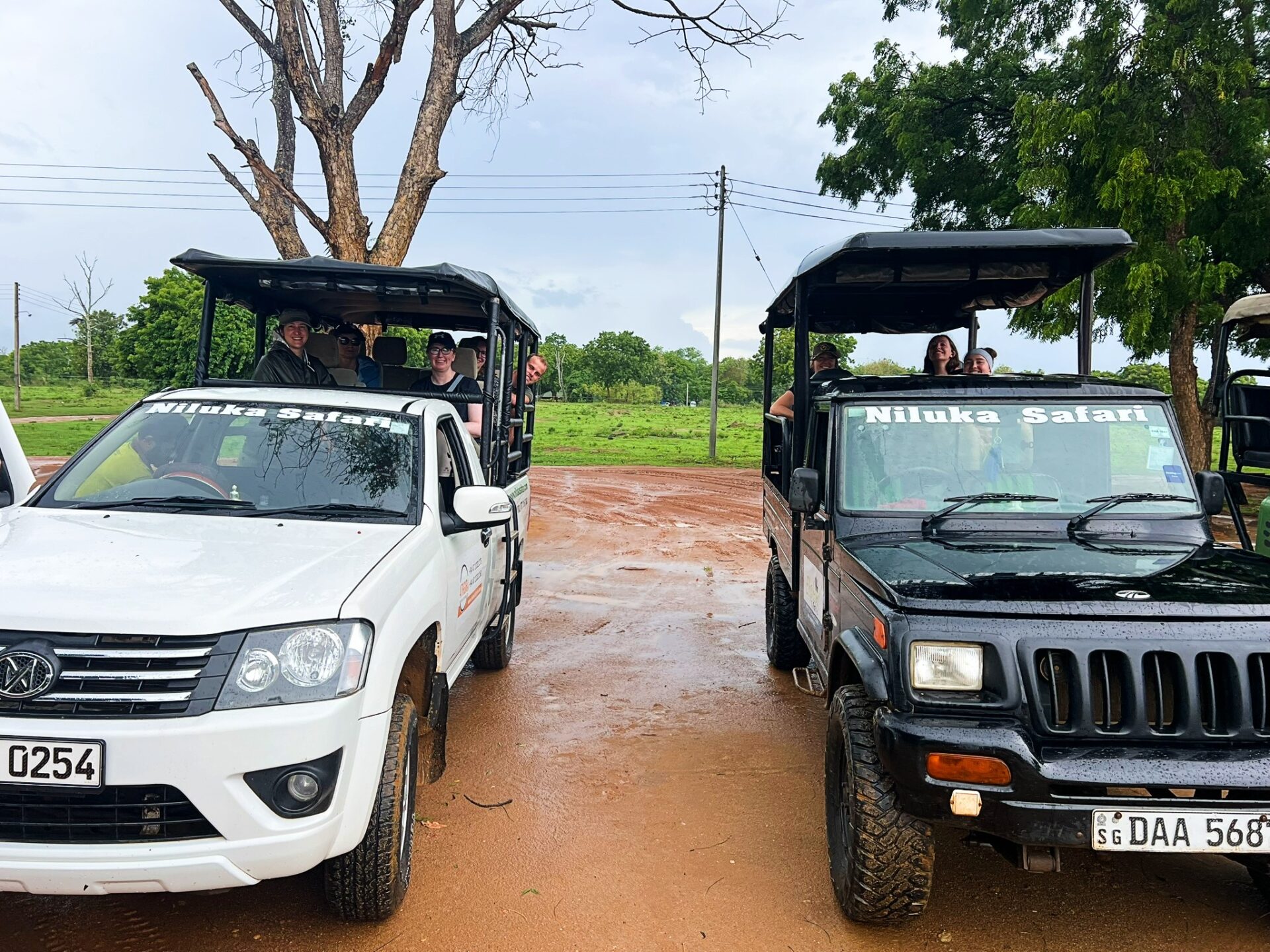
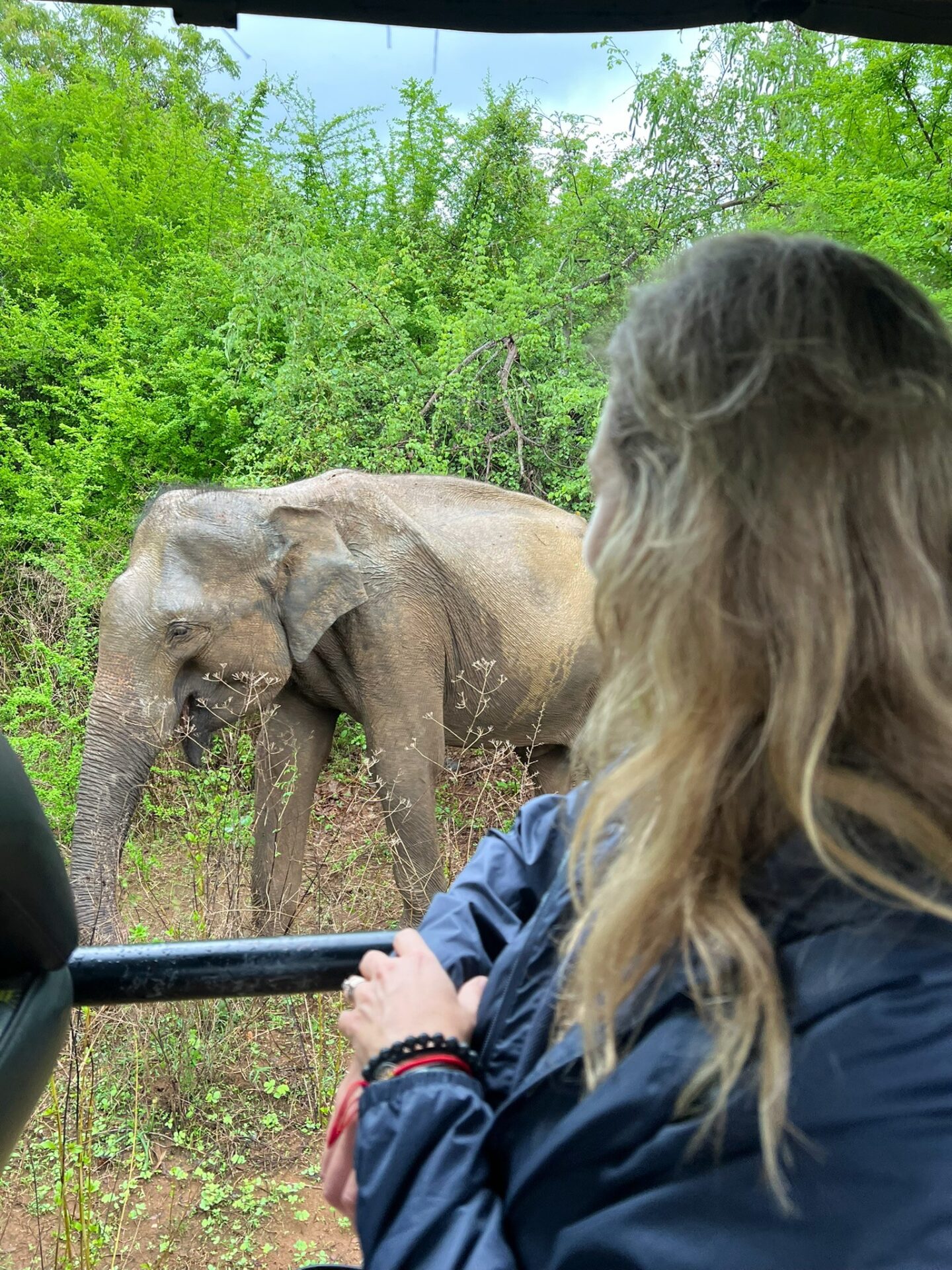
There are dozens of these outfitters. They all seem alike. You will most likely be perched on a comfortable bench, shaded from sun and potential rain (like we had).
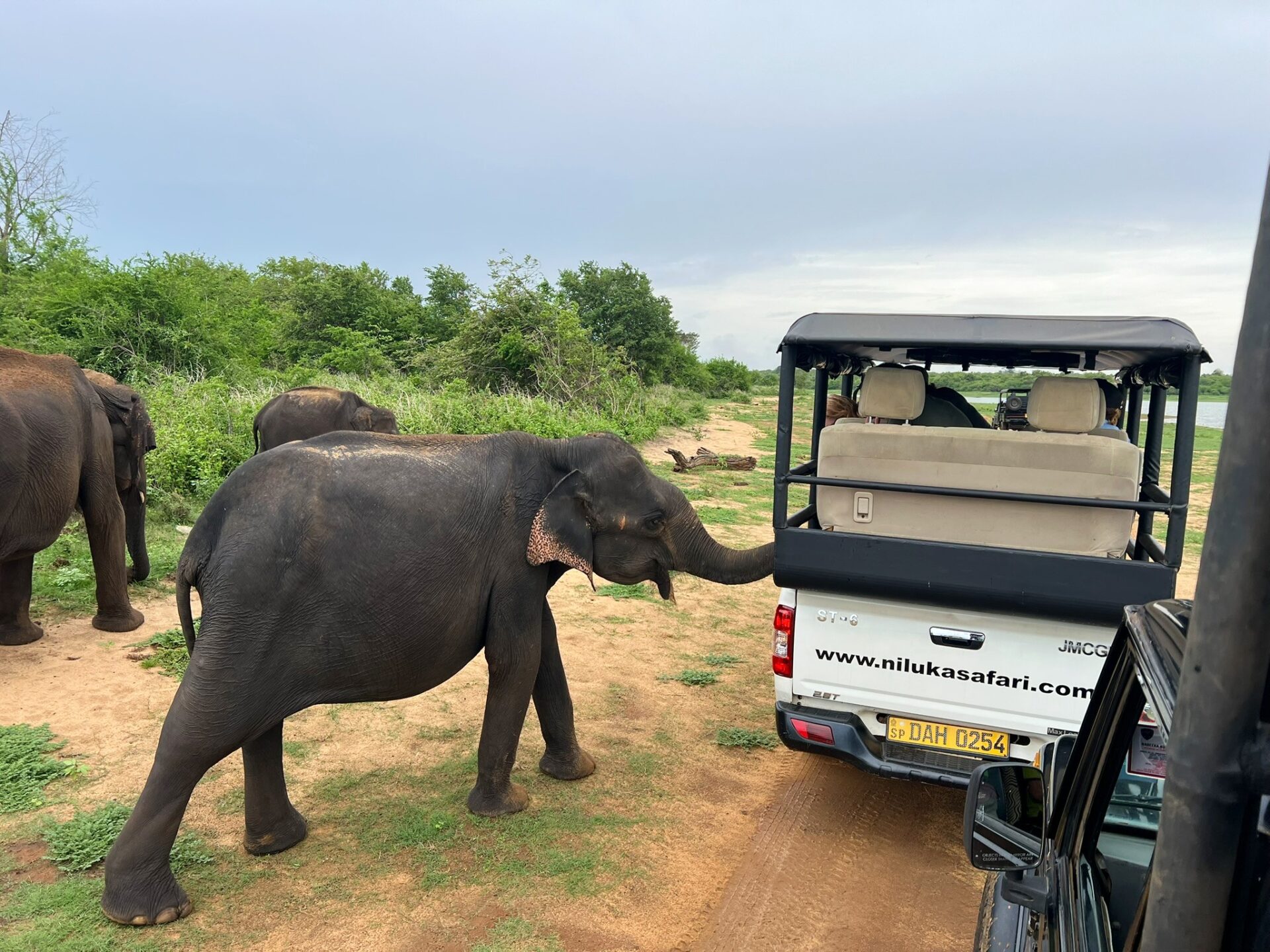
Our tour company was Niluka Safari, and I felt they did a great job. They were thoughtful and respectful, yet also spotted the wildlife quickly and easily.
Why Udawalawe over Yala? I wasn’t given a choice on my trip, but I can say that Udawalawe delivered on elephants! There are leopards in the park, as well, but there are higher rates of spotting leopards in Yala than in Udawalawe.
We did see other animals in Udawalawe, but it really was all about the elephants. Another benefit was the scenery over the reservoir, which was breathtaking — views of mountains in the background and you could see for miles.
Additionally, depending on your itinerary, Udawalawe National Park tends to be a more convenient location for travelers.
A couple of things to know:
You will want to contract with a licensed tour operator or driver to do this.
You can not get out of the Jeep except in particular areas.
There are no maps or road signs within the park, and GPS isn’t helpful. It helps to have local knowledge.
Our Jeep tour lasted close to 3 hours.
You will approach a ticket booth and washroom upon entering the park (which your guide must stop at and purchase entry). Use this washroom. After that, the only “bathroom” available is about midway through the tour, where the guides stop at a designated area and people find trees to use if they need to.
We were able to start our tour mid-afternoon because we were on a privately arranged tour at the start of the rainy season (October), and no one was particularly concerned about the heat. But we saw a remarkable number of elephants and activity because of the conditions. The elephants weren’t hot, either, so they were out. As a general rule, tours depart at sunrise or in the late afternoon.
Get Tips from the Trip Delivered
Life with a family is constantly a trip, and we’re here to take it with you. Once a month, we send intimate essays, tips, book recommendations, and travel guides to help you live an intentional family life
Additional tips for your safari in Sri Lanka:
Bring a water bottle
Spray yourself with bug spray.
A hat and/or linen clothes can be great as the temperature may vary quite a bit.
Take lots of photos – but also slow down and enjoy the moment.
Don’t touch the animals. Just, don’t do it.
Where to stay:
We stayed at the Royal Tuskers Hotel. The location was fantastic for park visitation. In fact, a very large (wise) elephant has a favorite spot where he stands close to the road and this hotel. He has learned that the shop across the street will sometimes throw out bananas – his direction.
And (for when the weather isn’t rainy), the Royal Tuskers hotel has a beautiful pool. Our tour guide had arranged for the hotel to cook a delicious meal of barbecue chicken for us, so they do have food services and beverages for sale.
The hotel isn’t very close to any town center, but it was clean, comfortable, and peaceful.
Even though there were dozens of Jeeps and the elephants were surely no strangers to humans in their space, these were definitely still wild animals. On different occasions, two large elephants made moves to charge at our Jeep (and no, we weren’t particularly close, and I didn’t feel as though our drivers had done anything inappropriate or aggressive). These are animals that are loyal and protect their “families.” They are wild and living in an area where they are given protection. So don’t mess with them, is what I am saying.
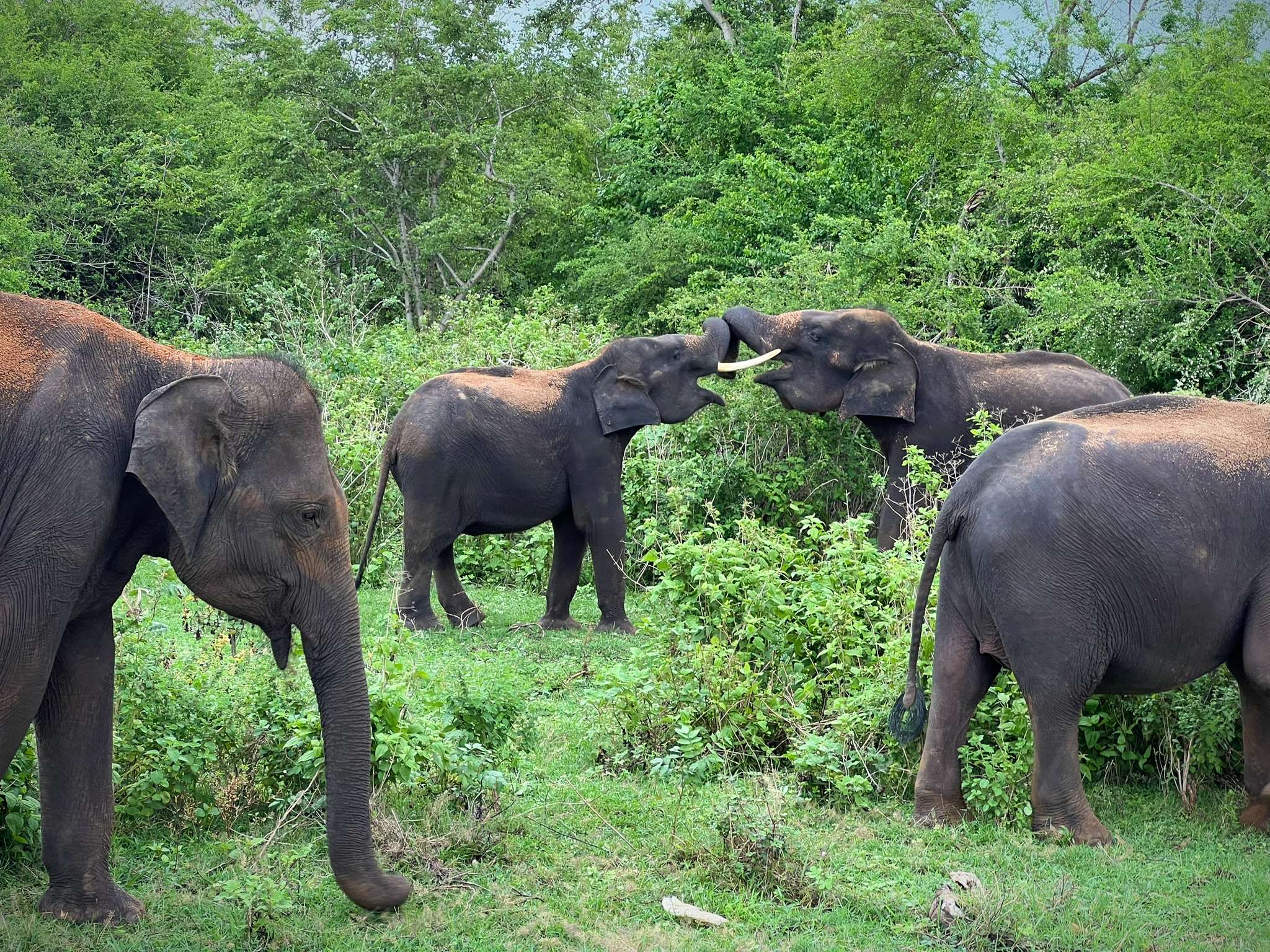
The elephants out and about (part of the herd of “teenaged boys” as our guide called them) came right up to the Jeeps, even sticking their trunks in to search for food they might want. We were told very clearly not to touch the elephants in any way, even when they approached us. In fact, we were firmly instructed to back up and away.
But, I mean…. Still a phenomenal experience.
The elephants have such personalities. And while it is easy to anthropomorphize animals without cause, the elephants really did feel as though they were individuals with thoughts, feelings, and special ways to communicate.
On our safari, we even saw a young tusker. Our tour guide, a Sri Lankan man who has guided groups all over the country for a decade, became incredibly animated and excited, snapping photos of the male with long tusks. An Asian tusker is exceptionally rare. And in Sri Lanka, they have been worshipped and revered through the centuries (a beloved tusker is taxidermied and on display at the Temple of the Tooth, for example).
While all Asian elephants, regardless of gender, grow incisors that look tusk-like, they are small, not extending beyond the lip line (called tushes), and can eventually fall out. But a true tusker is a male with a specific genetic map that can grow huge ivory tusks we associate with African elephants. Asian elephants with tusks are hard to find.
(I shared all of this knowledge with the Boy Scouts weeks later at the National Zoo, where they seemed unimpressed with my knowledge.)
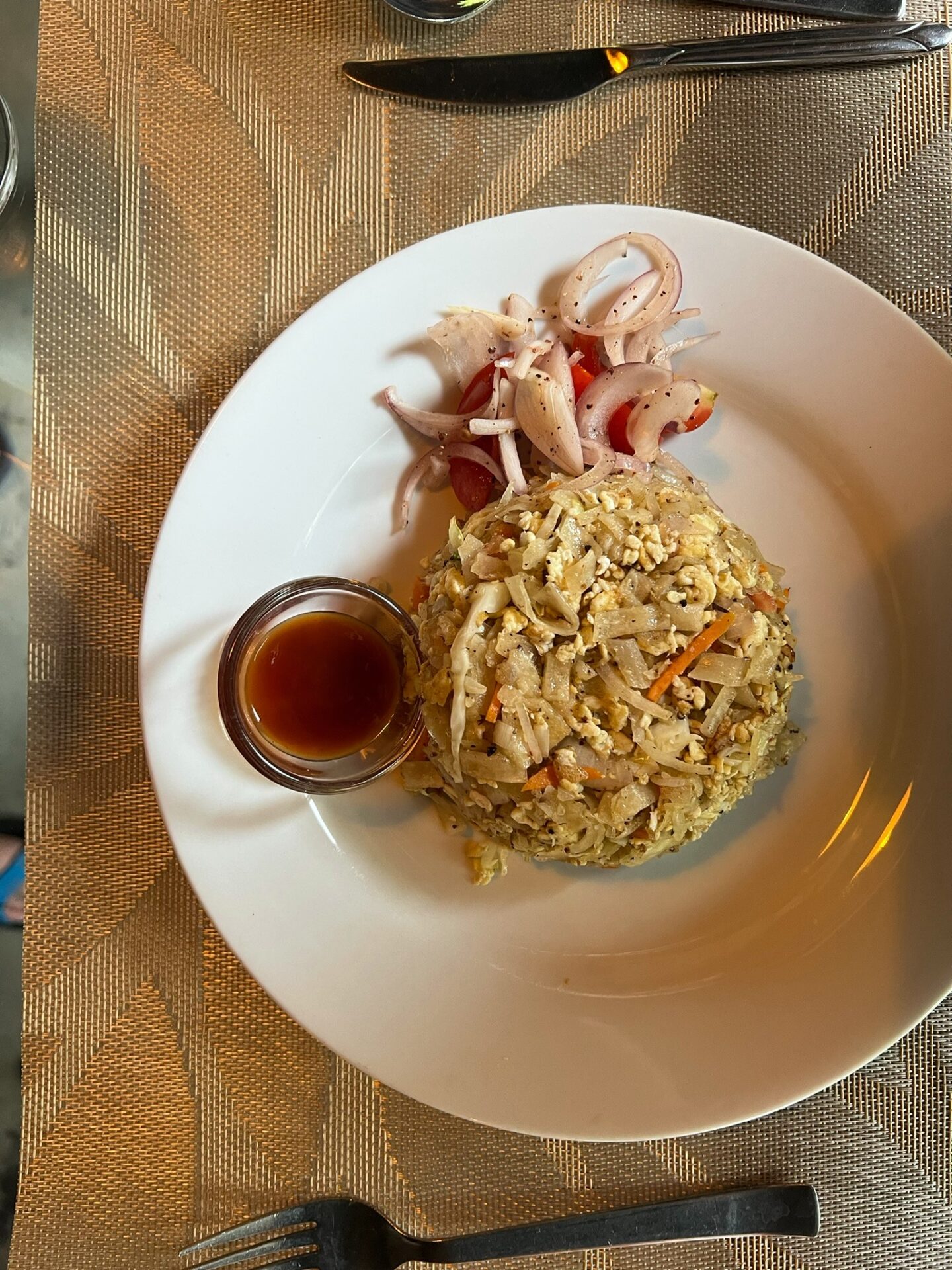
This spot was close to the park, and the kottu was deliciously salty and filling. It was a balm after a very rainy morning. Yet we were shocked and grateful (and full of kottu) when the rain stopped right as our safari started. The skies cooperated wth us and the elephants came out in droves.
These animals have to be one of God’s greatest creations. The beasts are powerful, strong, and potentially dangerous. Yet they move with such love, delicacy, balance, and grace that they seem to love life. They are gentle. They spread joy immediately. I swear they were smiling at me.
And I will never forget this for as long as I live.