Prior to traveling to Sri Lanka, while planning my trip from my comfortable couch, I knew that Sigiriya Rock (also called Lion Rock) was a must on my list. Sprawling views of a wild landscape? With a bit of effort to get somewhere motors and most people don’t go? All outside in a more remote location? Oh, AND it’s a UNESCO World Heritage site? YES PLEASE SIGN ME UP!
And this day trip to Sigiriya Rock did not disappoint in any manner at all. So if you are going to Sri Lanka, put “climb up to the top of Sigiriya Rock” on your priority list – and use this post to give you all the details you need to know to visit.
Of course, you should know by now that Mr. Family Trip and I aren’t intimidated by epic hikes or adventures that involve lots of incline (see here and here and here and here and, well, lots of posts).
But while Sigiriya Rock had a lot of exposed steps and I was a sweatball by the time we reached the top, I felt like the exertion was not that much for the incredible rewards.
Tips to Visiting Sigiriya Rock in Sri Lanka
Table of Contents
What is Sigiriya (or Lion Rock)?
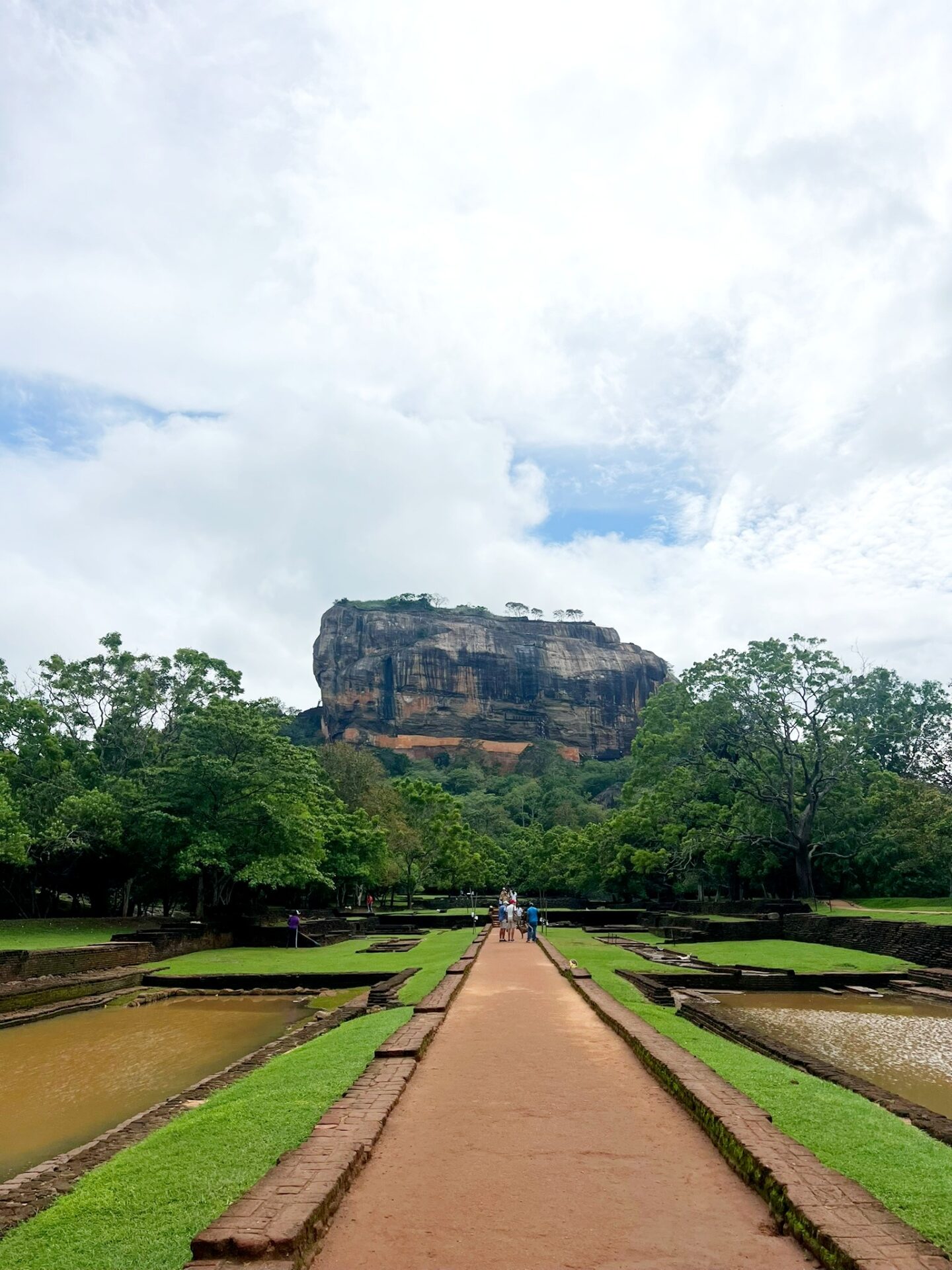
Sigiriya (similar to Uluru) is a large rock formation that comes out of nowhere – a behemoth of stone that glaringly sticks out of the landscape. This granite column is almost 600 feet high. And, again, like Uluru, it has become a place of human fascination through the centuries.
(Also, it was featured in Amazing Race, Season 6, for those who think it may look familiar but can’t place it.)
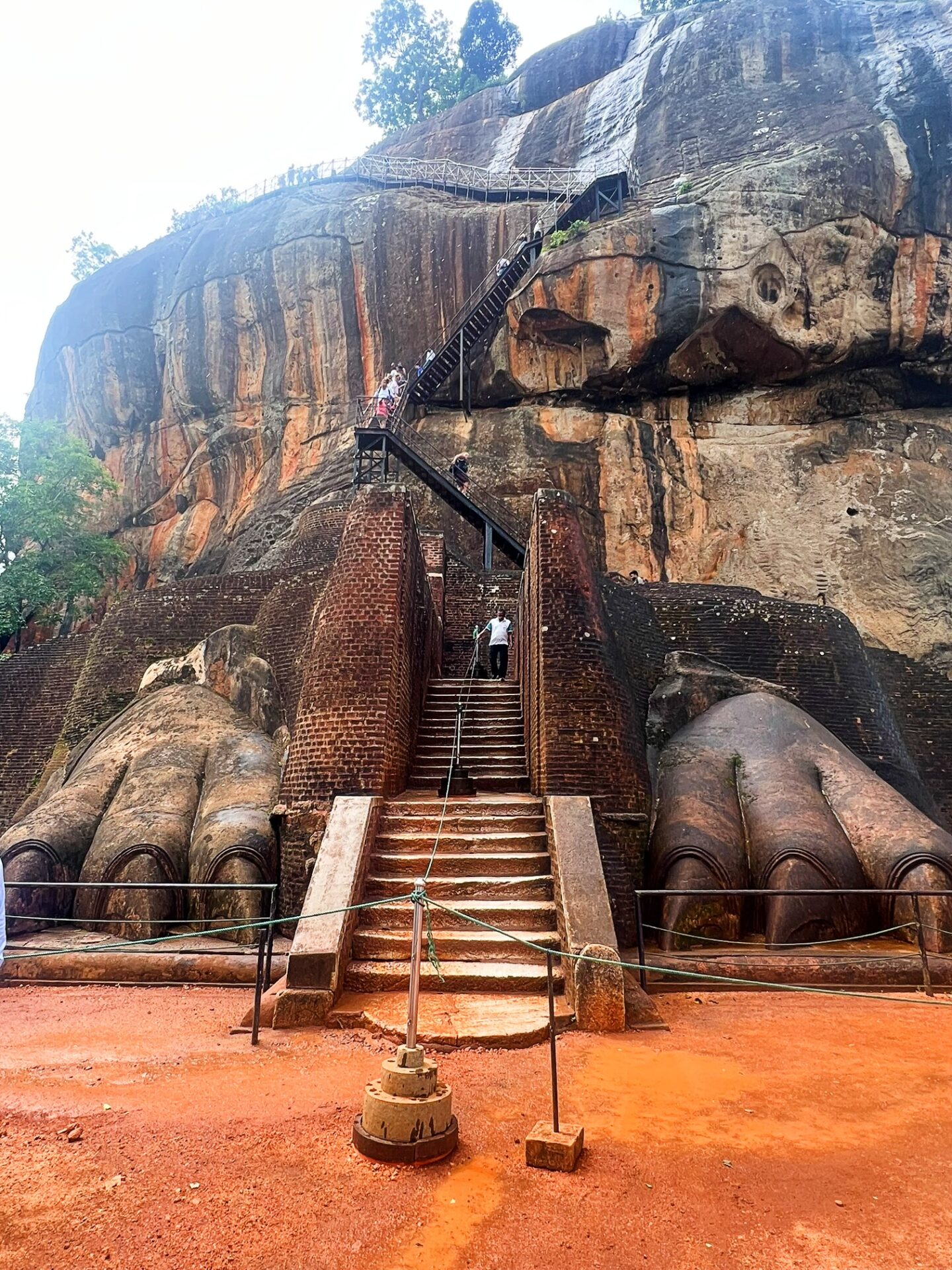
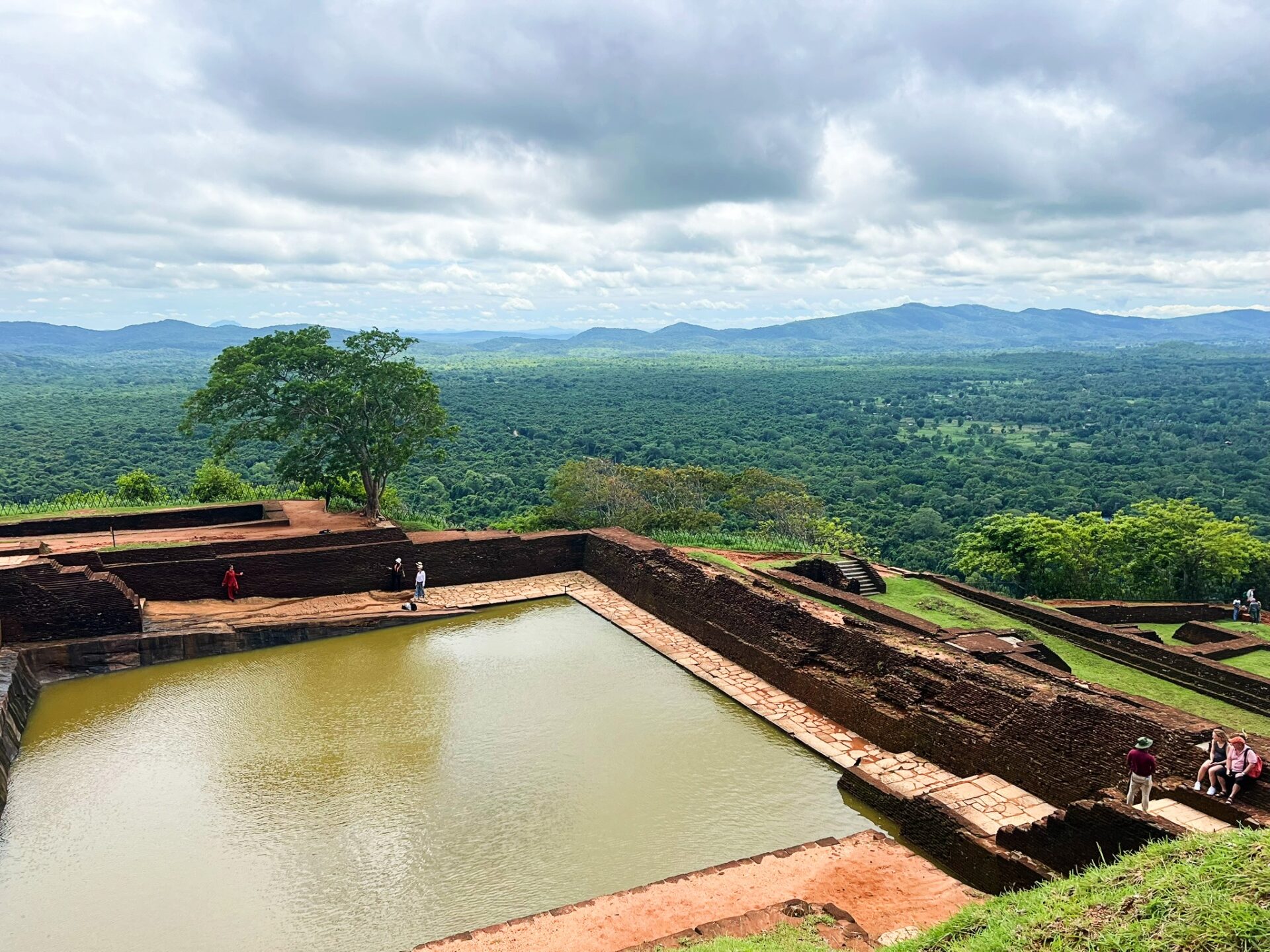
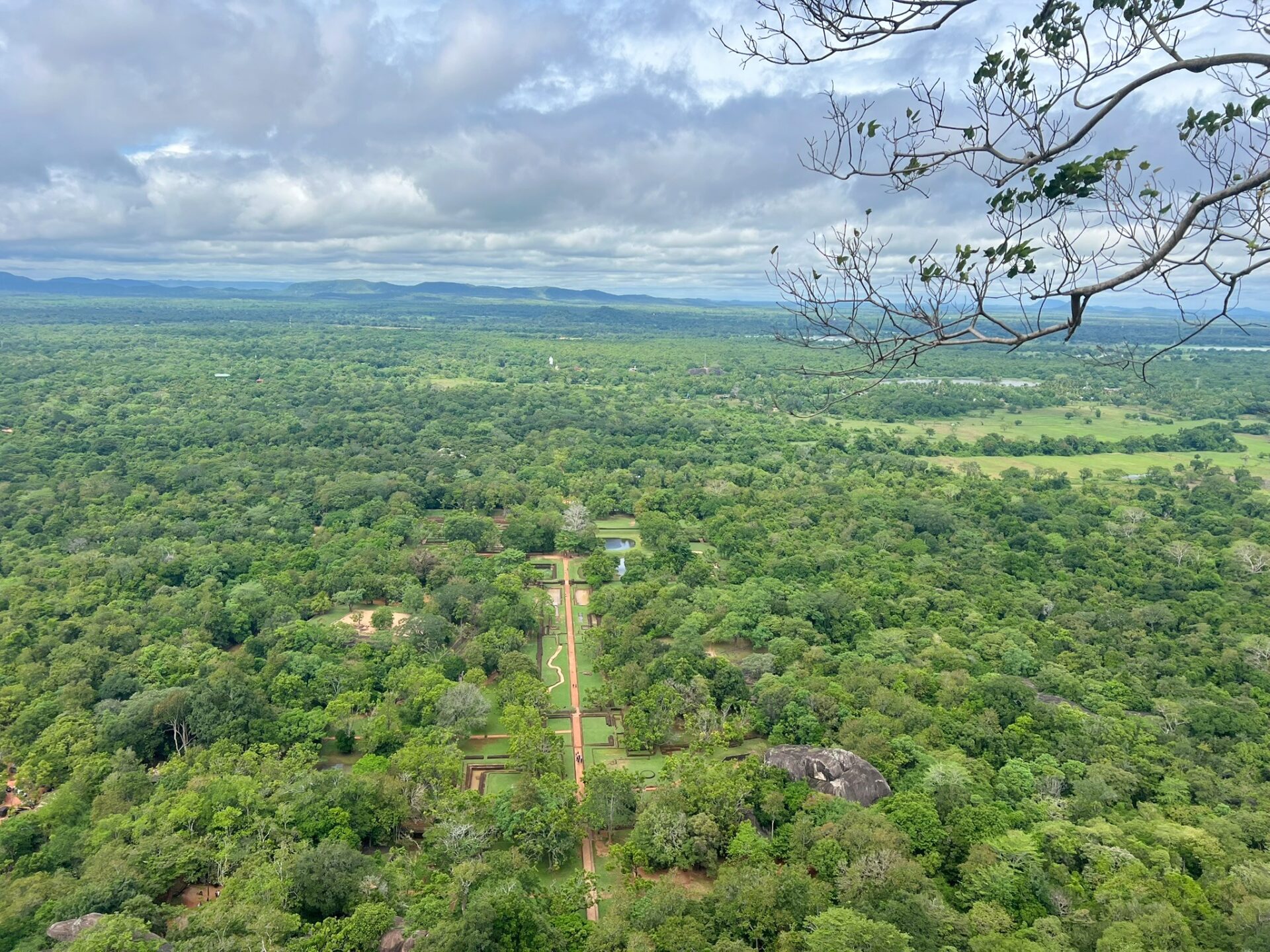
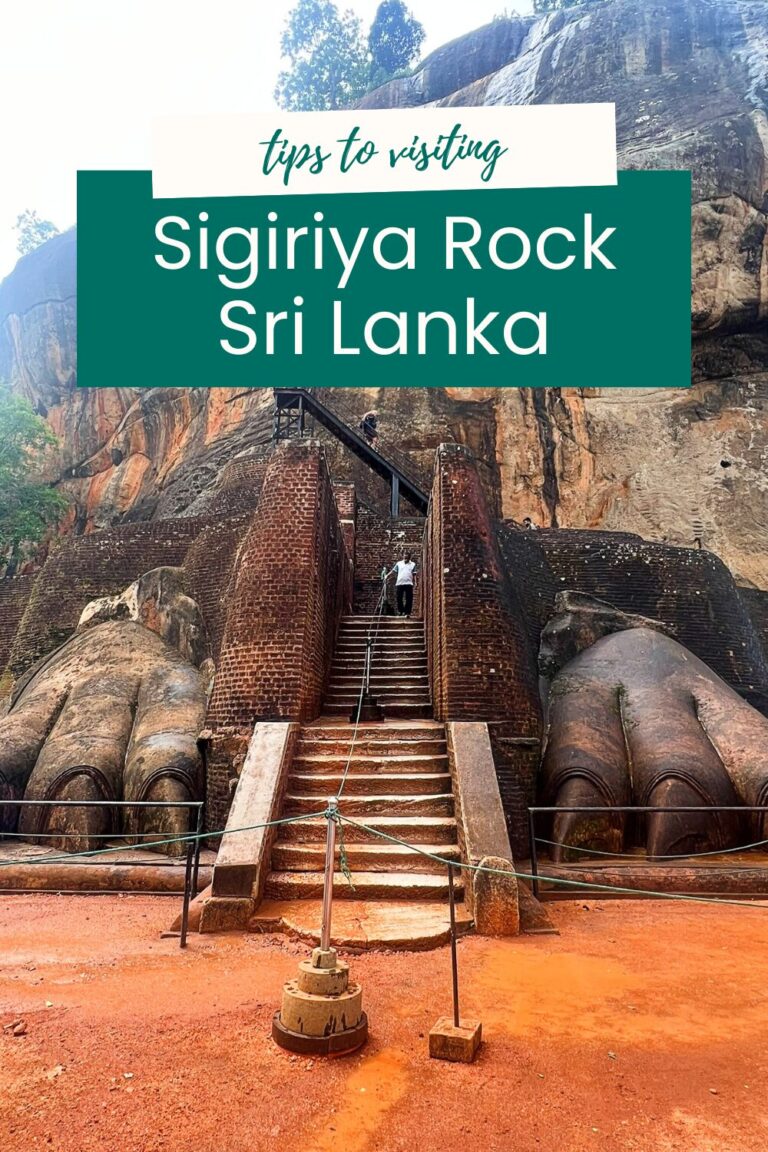
In the earliest BCE years, Sigiriya Rock was the home of Buddhist monks and religious recluses. But in 477 AD, it became the fortress of a king, who gave it the structure it has today. Leading up to the rock itself are the ruins of the king’s garden, and where his people lived. The entrance to the steps to get to the top of the rock is huge lions’ paws carved into the stone (giving the rock its name). Once on top, there are swimming pools cut into the granite, benches, and more marvels created by the king and his settlement. It is phenomenal to behold.
The legend is that the king killed his father, knowing he was not the rightful heir to the throne but wanting it. Anticipating his half-brother, who was the rightful heir, would avenge their father’s death and seek the throne, the king retreated to this fortress to rule and keep a watch out for the attack he knew would eventually come.
After waiting in dread and anticipation of war for 18 years (which seems a pretty terrible mental health state to live in), his half-brother finally came with his soldiers. After confusion on the battlefield, the half-brother won, and the king of Sigiriya was dethroned and killed. By all accounts, this fortress was then abandoned by the ancient society and perhaps eventually returned to by Buddhist monks.
But no one really knows!
What is certainly known, though, is that an ancient civilization created an elaborate life (for the times) on top of a ginormous rock. That’s why it’s a UNESCO World Heritage site today.
Excavation continues and the archaeological activities here are exciting and ongoing. I can’t wait to see what they unearth next and what they continue to learn.
About Sigiriya Rock: the Museum, the Mirror Wall, the Frescoes, and the Rock
As a visitor today, there are so many things to enjoy here. Yes, there is the climb up to the top of the rock, which you should do if you can (more on what to know about that below).
My visit, though, started in the museum. A lot of people skip this part – heading straight for the Instagrammable rock. But I really enjoyed what the museum had to offer. Not only did it put everything into perspective (both with the layout of the area as well as the history), but the items recovered by archaeologists from the site are on display, and they are mind-bendingly old and beautiful. I had all the same feelings I had when visiting the museum in Ankara.
Also inside the museum, they have replicas of the frescoes that visitors can take photos of. The original frescoes you can see while touring Sigiriya have a strict no-photos policy.
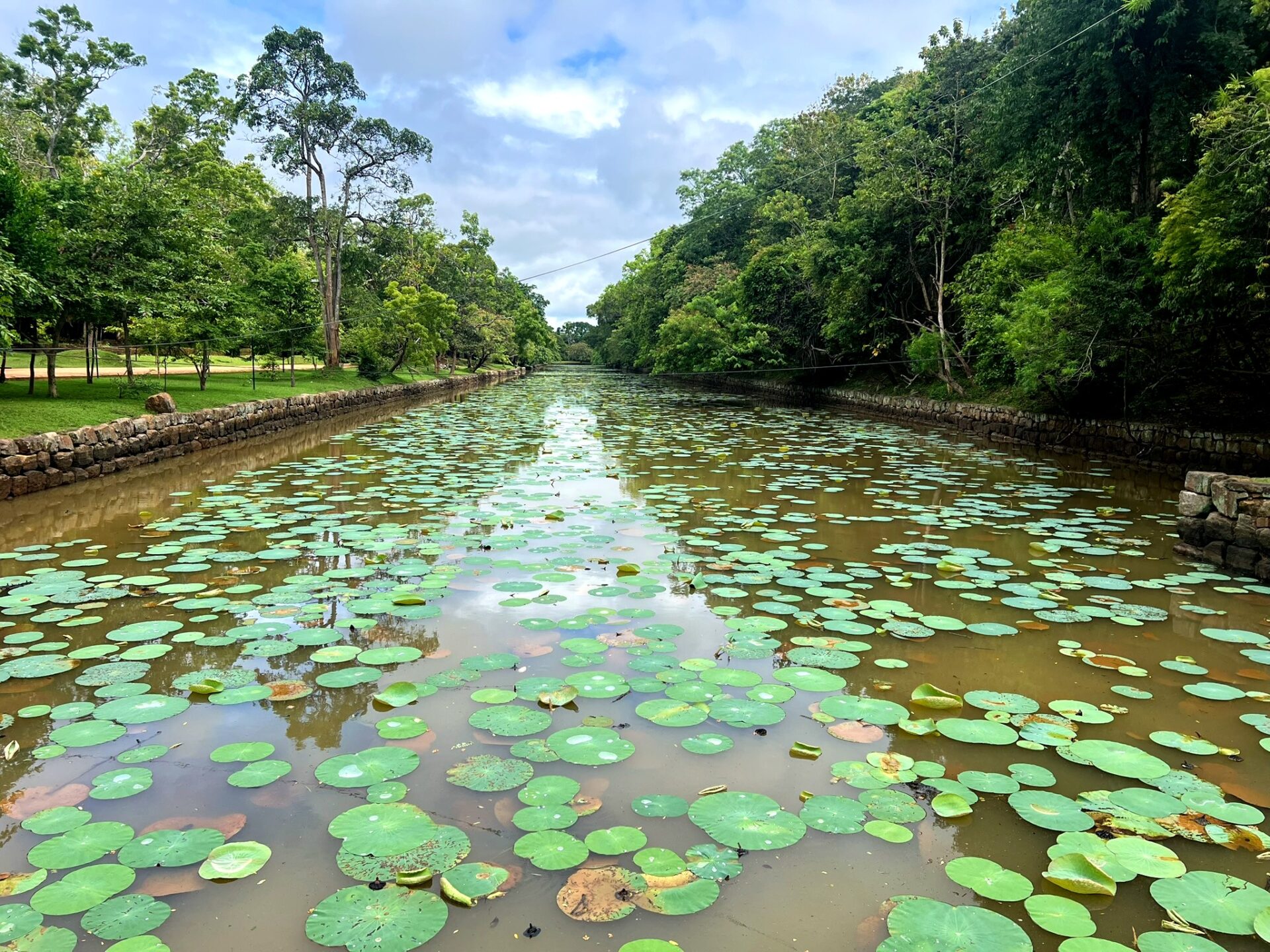
After the museum, we followed the meandering path through the grounds at the base of Sigiriya. Here, we could see remains of the kings’ gardens and the structures housing the people who lived under the shadow of the fortress.
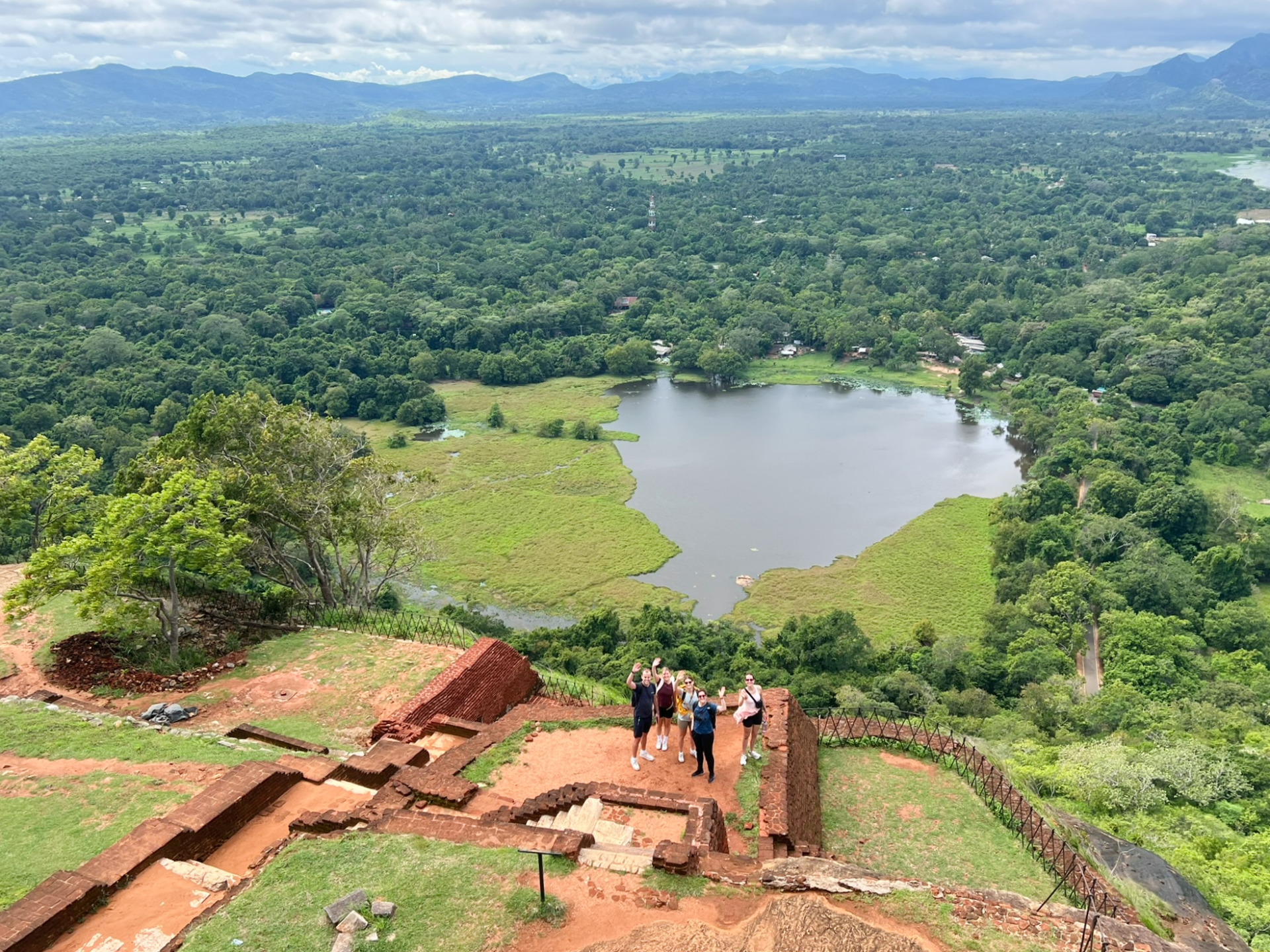
We began the climb up to the rock, with some stairs and steep elevation, where we hit a terrace. This terrace has a beautiful view and is where the steep steps up the rock outcropping begin. There is a pretty clear directional path for tourists exploring Sigiriya.
On our way down, we went by the Mirror Wall. This Mirror Wall, made from plaster, was said to be so reflective and smooth that the king could see himself in it. Today, the Mirror wall is still smooth (though not reflective) and is the site of ancient graffiti (also cool).
We took the spiral staircase to go through the temple housing the frescoes. The fact that these paintings are as preserved as they are is remarkable.
We then continued the walk down through the grounds and back to our shuttle.
How to Get to Sigiriya
We went to Sigiriya Rock from Kandy. This seems to be the best departure point for daytrippers (although trips from Colombo are offered).
Since we had a group of eight people, I arranged a private van shuttle with gihansatoursandtravels.com. The driver was very communicative over WhatsApp, prompt, and very kind. We checked with our G Adventures tour guide, and he assured us the price we were quoted was very fair and reasonable.
We left our hotel in Kandy at 7:00 am and, after Sigiriya and the Cave Temples, we were back at our hotel at 3:00 pm. It was about two hours driving time in each direction, and we did not stop for lunch.
Sigiriya Rock is seeing its fair share of tourists these days and, accordingly, infrastructure is popping up all around. There were quite a few boutique hotels, spas, cute cafes, and shops right outside the Sigiriya entrance. While we didn’t stop at any, I could see spending a night or two in this area. Start at this blog post on the town of Sigiriya if you’re interested in more time in the area.
What to Know to Visit and Prepare for Sigiriya Rock
This was the most expensive excursion we did in Sri Lanka – over $30USD for entry (and, of course, we did pay extra for a private van shuttle from Kandy). This spot did, indeed, take credit cards (despite what I shared in my Colombo post). Even though a few huge tour coaches had shown up, we didn’t have to wait for entry – no lines.
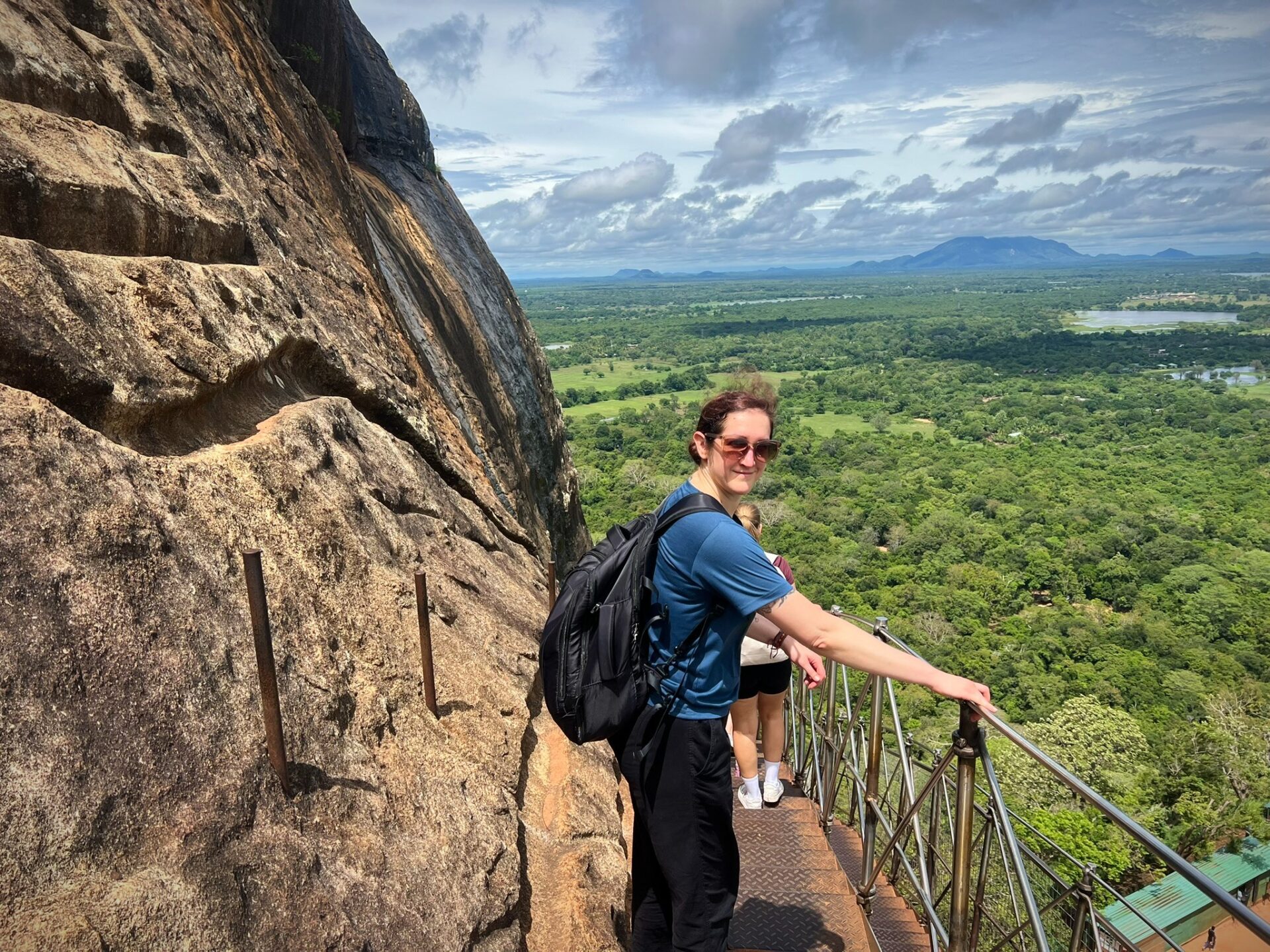
The final steps up to the top of the rock may be challenging for those with a fear of heights. While the experience is fairly short-lived, these are metal steps that hang out over the earth below at a significant height. You can get a decent view from the terrace at the bottom of the steps if you elect not to do the steps, but the best views will be from the top of the rock if you can get there. I can get a bit woozy with some heights, but I found this experience easy.
If there is a crowd, the going up and coming down may be stop-and-go as visitors with all levels of fitness tackle them (and as the monkeys come by, forcing visitors to stop and take photos).
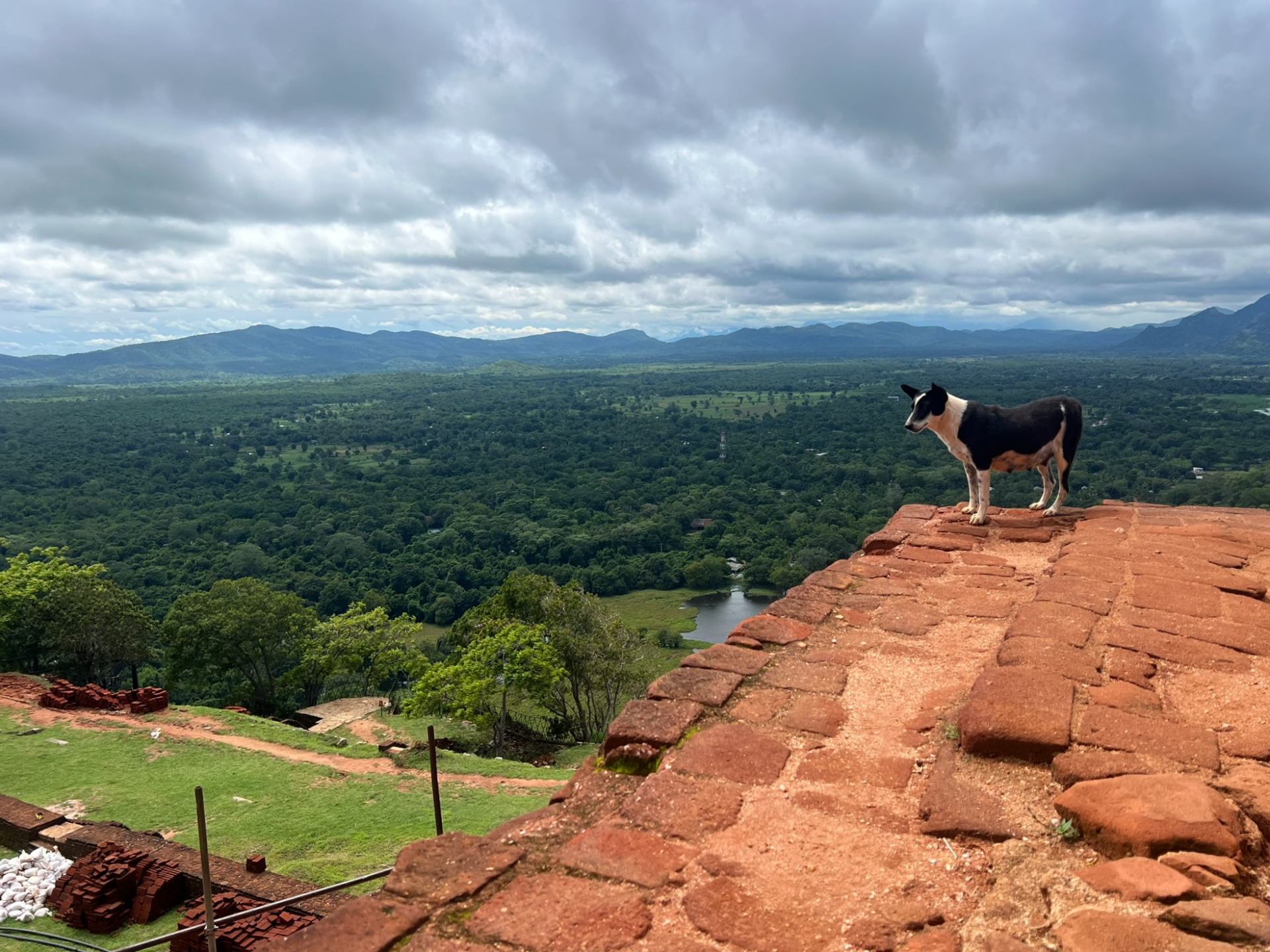
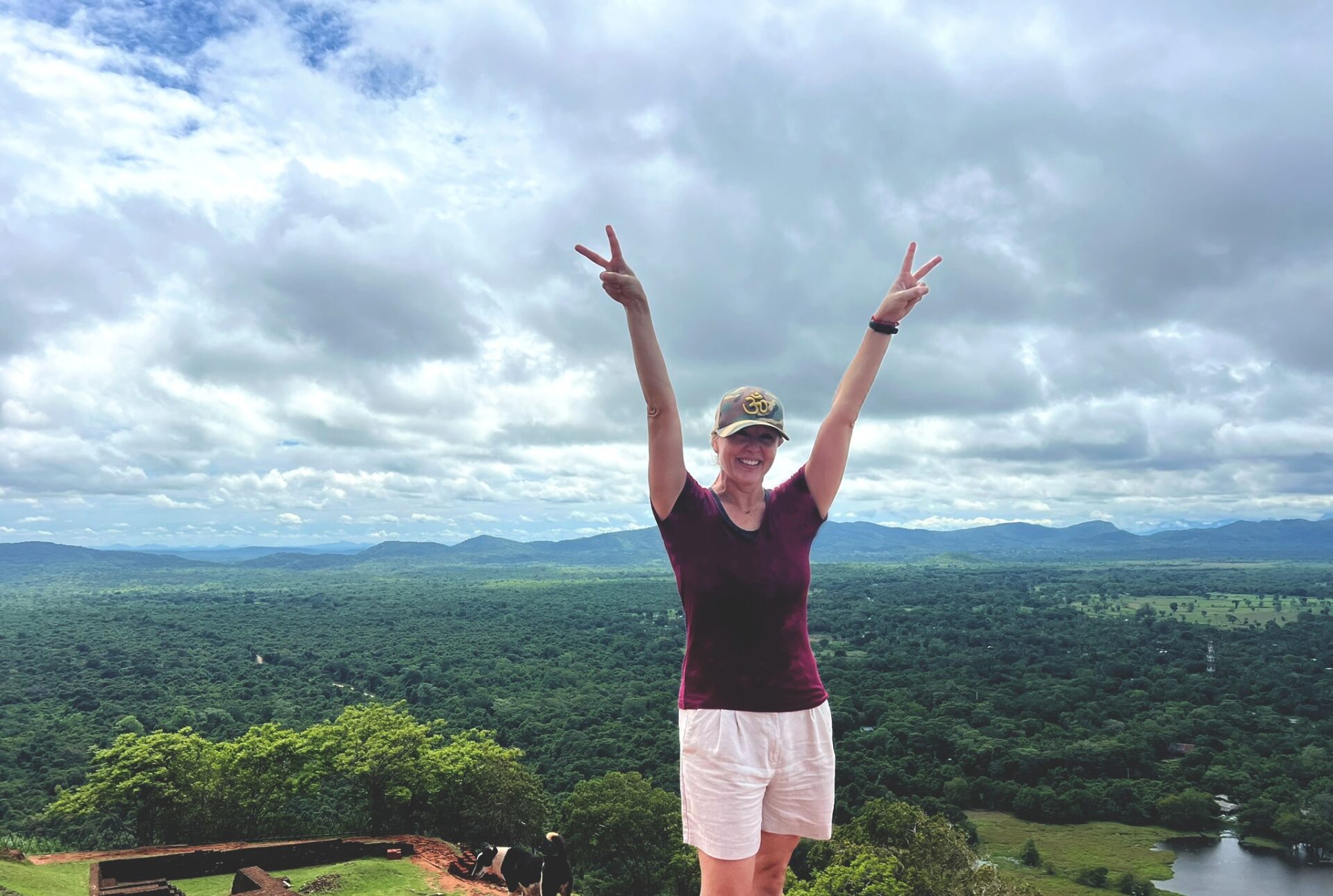
As you can likely intuit, safety standards in Sri Lanka are far different than those in the U.S. This means that at the top of Sigiriya Rock, you aren’t going to find many railings or safety guards. This didn’t bother me at all, and it never felt dangerous, but again, if you have a fear of heights, stay back from the ledge. Once you are on top of the rock, there is quite a large flat area to explore.
At the beginning of the walk, there are signs warning visitors about wasps. While they don’t fly around and sting, these are huge hornets that will attack if they feel threatened. Visitors are asked to keep their voices down when walking through this area, and Sigiriya will shut down if a wasp attack commences. I never felt like this was close to happening.
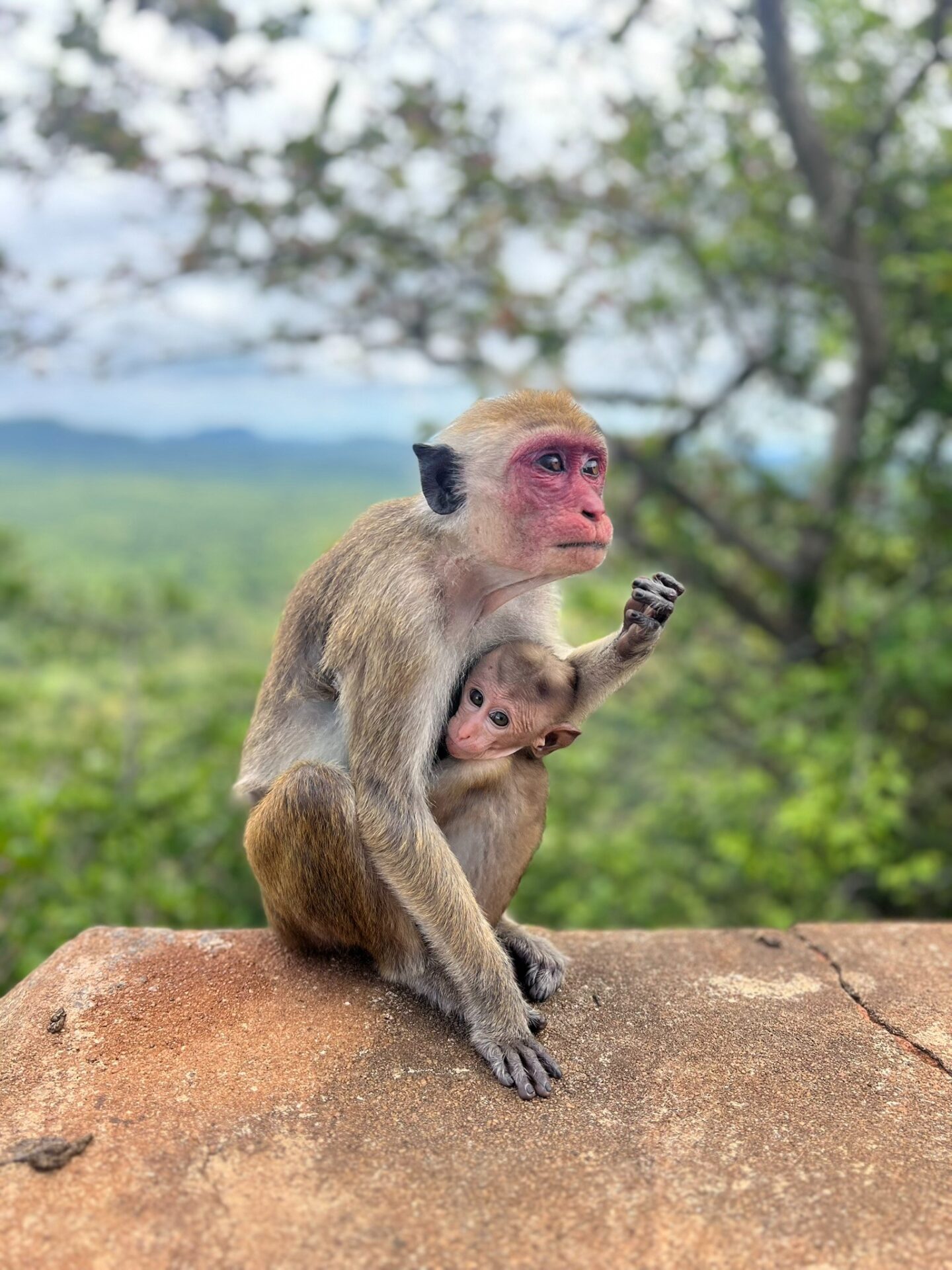
Yes, there will be monkeys around. But all the local Sri Lankan people warned us that these are “not nice monkeys.” They will steal your stuff and can hiss and scratch. So keep your distance. But do take lots of photos because they are still monkeys…
Hiking up the rock is exposed – no shade to be found. If you are waiting on the terraced area before the metal steps to go up, you can find some trees to gather under, but other than that, you are exposed to the sun and elements. Wear sunscreen, bring a hat, and try to time your exertion outside of the hottest and most humid hours of the day.
Bring lots of water with you! There were water fountains in the visitors’ center (where the museum and the ticket office are) to refill. But once you get outside the buildings and onto the grounds, there aren’t any water fountains or bathrooms.
Get Tips from the Trip Delivered
Life with a family is constantly a trip, and we’re here to take it with you. Once a month, we send intimate essays, tips, book recommendations, and travel guides to help you live an intentional family life.
Sigiriya or Pidurangala?
“Next door” to Sigiriya is a smaller rock hill called Pidurangala. This is a hit spot with backpackers as it is free to climb and it looks at Lion’s Rock. It is not part of Sigiriya.
BUT – having seen them right next to each other – Pidurangala isn’t even half as high as Sigiriya. So you won’t get the same views of the landscape. You won’t be able to see the top of Sigiriya Rock. Also, it was pretty crowded at Pidurangala when we were there, so it didn’t exactly come across as a hidden spot to escape tourists.
Pidurangala does not include the museum, the grounds, the mirror wall, the frescoes, or any of the other interesting sites at Sigiriya.
If you can spring for the entrance fee to Sigiriya Rock (which, again, I know is expensive by Sri Lankan standards), I would highly recommend that experience over Pidurangala.
Is Sigiriya Rock Worth the Visit?
Absolutely!! It was a harrowing and rather long shuttle ride from Kandy (Sri Lankan streets are not for the faint of heart). But seeing the huge rock pop out of the ground, seemingly out of nowhere, shrouded in reds and dripping with green trees, was breathtaking. And the views from the top are majestic. Worthy of a king.