What do you need to know to visit Fallingwater? GO INSIDE.
That’s it. That’s the tl;dr post. Go inside Fallingwater if you go.
There are tickets to walk around the grounds and see the house from viewpoints, but I wouldn’t bother doing that unless I was taking a tour of the house. The magic is experiencing this house from the inside.
Keep reading, though, for more information and tips to prepare you for your visit…
The History of Fallingwater
Designed in 1935 by the legendary architect Frank Lloyd Wright, this home has become one of the most celebrated examples of modern architecture, seamlessly blending art, engineering, and the environment. I am not into midcentury modern as a general aesthetic, but I loved this home.
The Kaufmann family (consisting of a married couple and their son) owned a Pittsburgh department store. With their wealth, they purchased property in the woods of southwestern Pennsylvania, near Bear Run, and stayed at a primitive lodge for weekends of fresh air and forest tranquility. They frequently invited their store employees as guests to the grounds. They celebrated nature and loved escaping to the area.
When they eventually decided to build a permanent retreat, they asked Wright—then 67 years old and enjoying a career revival—to design it.
The Kaufmans were an interesting couple, with the matriarch, Lilian, known for her stylish tastes. She was a world traveler and bolstered the reputation of the Kaufmann store with her selection of wares to sell.
Choosing Frank Lloyd Wright to design their house was part of her commitment to style and taste. This home, built over a waterfall, eventually became emblematic of a new philosophy of architecture itself.
Fallingwater is instantly recognizable for its cantilevered terraces and broad horizontal slabs that jut out over the falls, giving the illusion of floating. Wright used reinforced concrete and anchored the structure to the rocky hillside, creating a daring balance between strength and fragility.
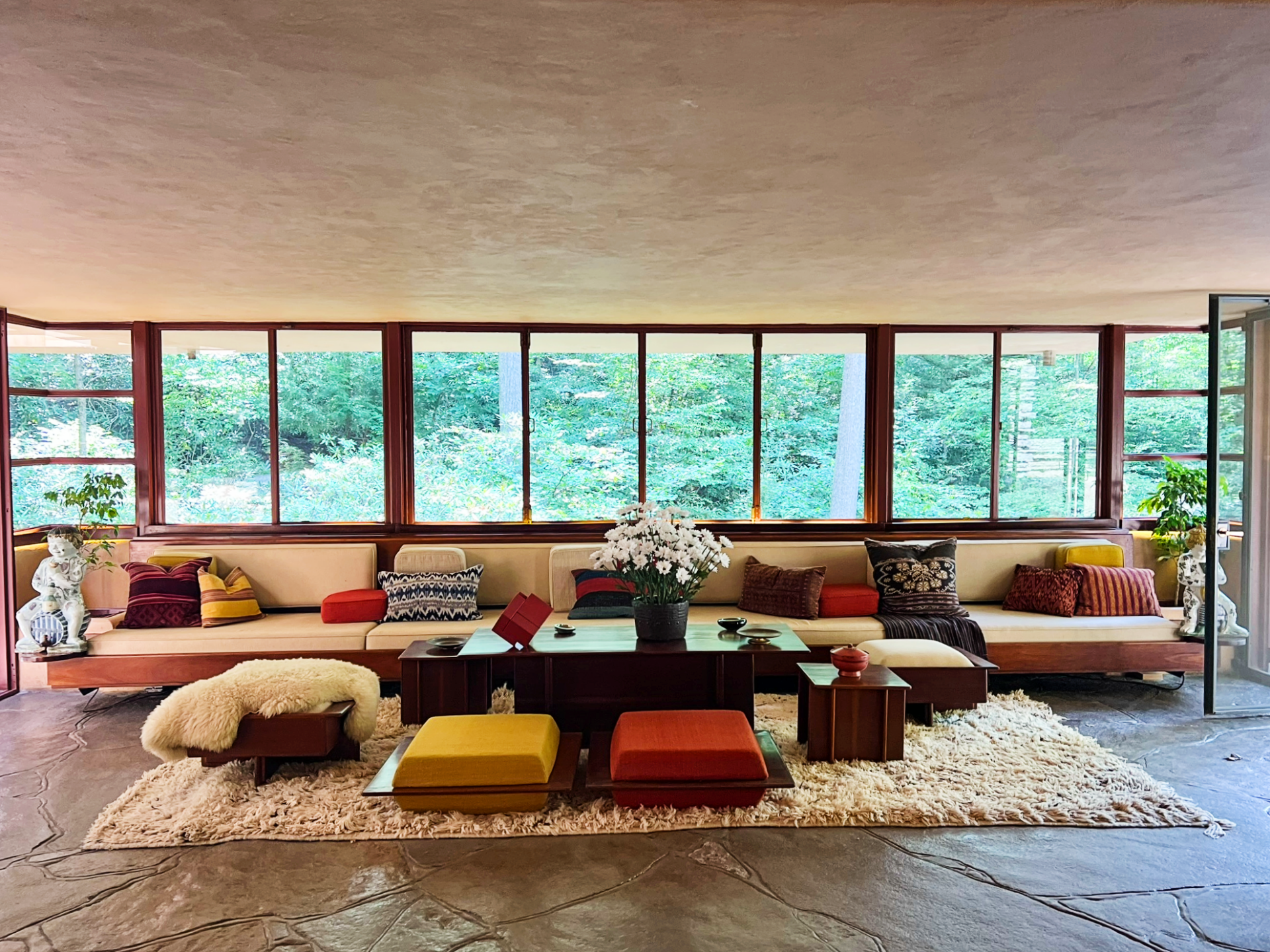
Inside, the materials echo the outdoors: local sandstone floors, natural rock formations left exposed in the living room, and ribbon windows that frame the forest. Even the color palette (earthy ochres and reds) was chosen to blend with the surrounding landscape. The result is a home that feels not built on the land but of it.
Completed in 1937, Fallingwater immediately captured the world’s imagination. It appeared on the cover of Time magazine in 1938, cementing Wright’s status as a genius and redefining what American architecture could be. Today, it’s considered one of the greatest architectural achievements of the 20th century.
The house was donated to the Western Pennsylvania Conservancy in 1963 and is now open to the public, drawing visitors from around the world. Despite ongoing efforts to preserve it (those daring cantilevers have required careful reinforcement), Fallingwater still stands as a living example of Wright’s vision of “organic architecture”—the idea that buildings should grow naturally from their surroundings.
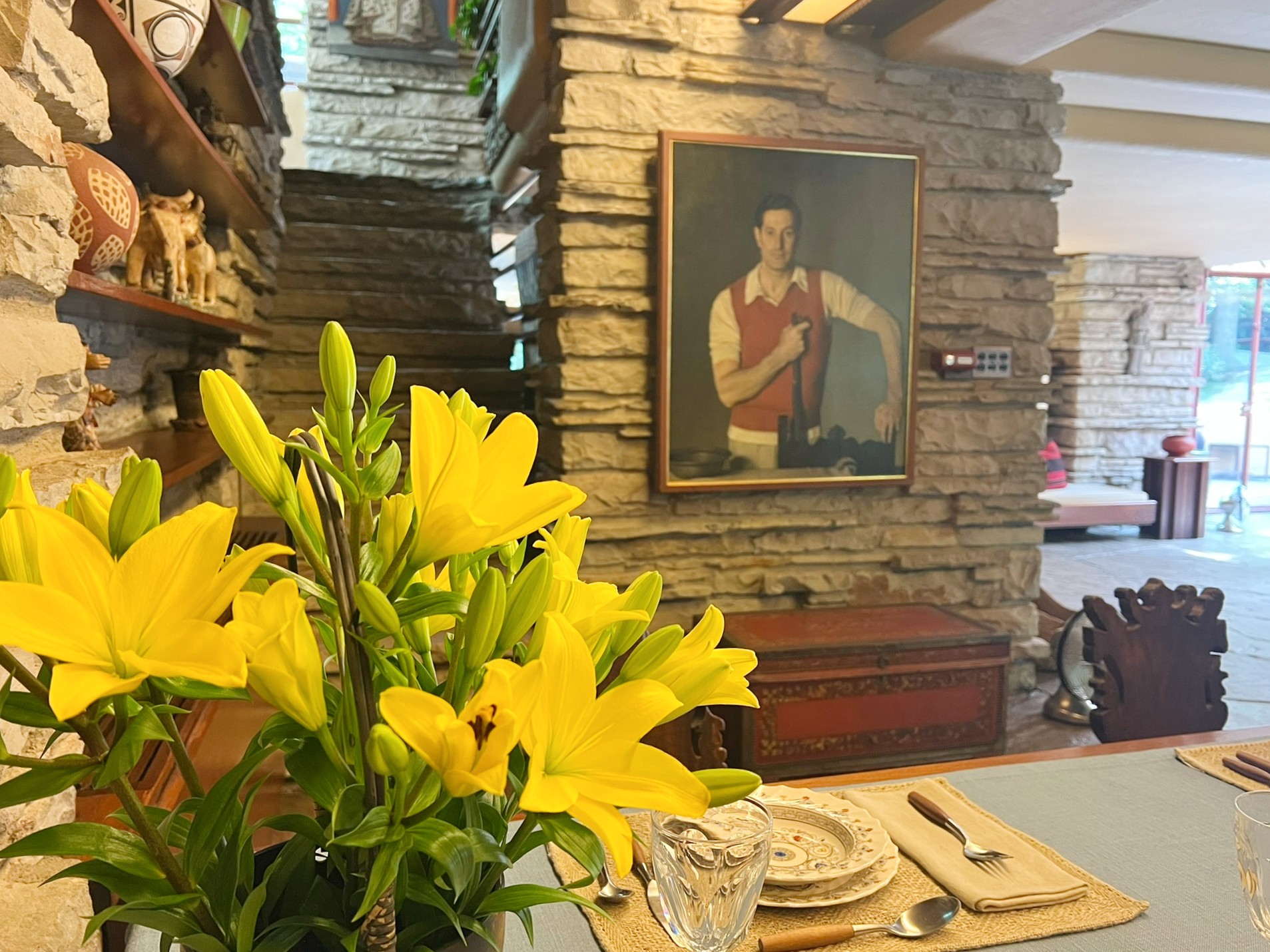
Surprisingly, very little has changed through the years. Although, the younger Kauffman changed his living quarters, much to the dismay of Wright (who helped design and pick the furniture down to the kitchen table and remained heavily involved in the home’s accessorizing throughout the years).
Given Lillian’s eye for the exquisite (and the fact that the Kaufmanns ran in all the “right circles”) the home has original Picassos on the walls and rare Tiffany lamps on the desks.
The home isn’t as large as we had anticipated, and fairly simple overall. But it oozes relaxation and refined luxury. I could easily envision all of the bright and beautiful having cocktails in their 1950s finery on the cantilevered balconies overlooking the falls.
Top Tips for Visiting Fallingwater
1. Book Your Tour in Advance
Fallingwater isn’t the kind of place you can just drop into — and that’s a good thing. Tours are timed and limited to small groups to protect the house and its surroundings. Book online weeks ahead, especially during peak seasons (spring through fall). There are a few types of tours, from a quick architectural overview to in-depth experiences that let you linger longer, so check what best suits your interest and time.
2. Visit Early (or Late) for a Quieter Experience
Crowds can build up fast, especially on weekends. Aim for a morning or late afternoon tour to enjoy a more peaceful atmosphere and softer light filtering through the trees.
3. Dress for the Outdoors
Even though much of the tour takes place inside the house, you’ll spend time walking through the wooded property, crossing stone paths, and exploring outdoor terraces. Comfortable shoes are a must, and the weather can change quickly in the Laurel Highlands. Pack a light jacket or rain layer.
4. Don’t Miss the View from Below
Speaking of walking the trails…
The best view isn’t from the house itself – it’s from below, across the stream. After your tour inside, follow the short trail that leads to the overlook where you can see the cantilevered terraces jutting out over the waterfall. This is the postcard shot everyone recognizes, and seeing it in person feels almost unreal.
5. Explore Beyond Fallingwater
As I shared, the area around Fallingwater is full of natural beauty and history. Nearby Ohiopyle State Park has waterfalls, trails, and even whitewater rafting if you’re feeling adventurous. Kentuck Knob, another Frank Lloyd Wright design just a few miles away, offers a different take on his organic architecture.
Get tickets and purchase tours at the official website: fallingwater.org.